
The ILS market has become fundamental to reinsurance programmes, while casualty sidecars are attracting major investors with the capacity to accelerate growth, according to Aon Securities CEO Richard Pennay.
Insurance-linked securities (ILS) have reached a scale that makes them a core component of global reinsurance capital, Richard Pennay, CEO of Aon Securities, told GR.
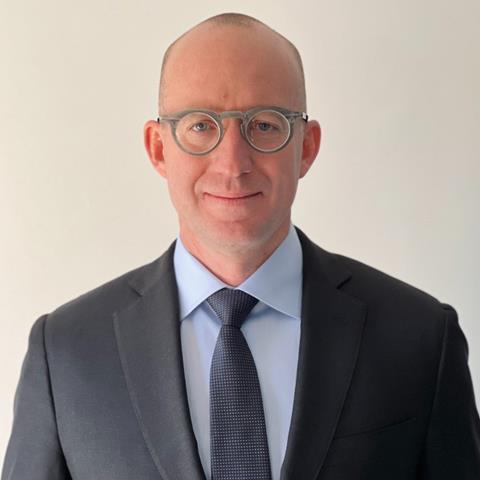
Successive record years tell only part of the story, according to Pennay.
The more significant development is how extensively insurers now incorporate capital markets capacity into their reinsurance programmes, he suggested.
Some of Aon Securities’ largest US insurance clients purchase more than 30% of their catastrophe placements in bond format, he said.
“That $145bn ILS market [Aon Securities’ estimate at 30 June 2026] is now a fundamental core of the overall reinsurance capital,” Pennay said.
Retained earnings have supported that expansion, with investors keeping much of their returns within the market, he explained.
Pennay put annual ILS growth at approximately 6.5% over a decade, accelerating to 13% over the past three years. Traditional catastrophe bonds now account for about $65bn outstanding.
Expansion beyond property catastrophe could provide further impetus.
Casualty sidecars are attracting a different investor base from the dedicated ILS funds, Pennay emphasised, and investors seeking diversification that dominate property catastrophe.
“These structures combine underwriting exposure with an opportunity for investors to manage the associated assets, opening the market to institutions capable of deploying capital at scale,” Pennay said.
“We have some of the world’s largest investors focused on it, and they have the ability to scale up into this market quite quickly,” he continued.
The shift marks an evolution from the property cat sidecars that have served reinsurers’ retrocession needs for more than two decades.
Whole-account and casualty structures are broadening both the available business and the reasons investors participate, according Pennay.
“A few years ago, it was almost exclusively property cat,” Pennay said. “Today we are talking across property and casualty lines of business.”
Cyber catastrophe bonds offer another avenue for expansion, although plentiful traditional reinsurance capacity available has moderated ILS demand.
Pennay said broad participation in recent cyber placements demonstrated that an investor following “is now established”.
However, insurers’ ability to obtain sufficient traditional cover at attractive terms has limited their need to access cat bonds.
Geographical diversification is also progressing, although international growth continues to lag the US.
Pennay highlighted an investment-grade German flood transaction as one such example of the market’s broader reach.
US catastrophe exposure remains the principal driver because of its importance to insurers’ solvency and volatility, he said.
Pennay expects further ILS growth in 2027. Given recent investor returns and premium adequacy, he argued that a very material natural catastrophe would be needed to shake the market.
“The relationship between ILS and traditional reinsurance pricing will also shape demand. Significant softening in reinsurance rates could alter reinsurers’ appetite for ILS protection, making the balance between the two sources of capacity a key theme for the year ahead,” he added.









No comments yet