
Munich Re US marine underwriting exec Sean Dalton succeeds Frédéric Denèfle and will serve a four-year term at the marine insurance industry group
The International Union of Marine Insurance (IUMI) has elected Sean Dalton as its new president.
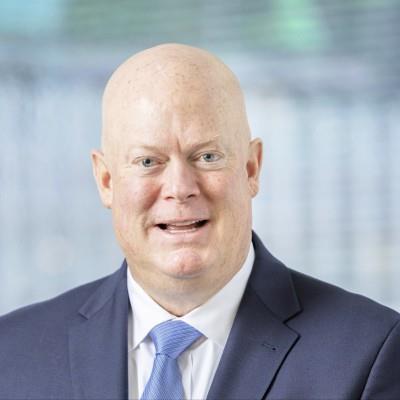
Dalton (pictured) was elected during a meeting of the IUMI Council at the association’s annual conference in Rotterdam.
IUMI said he will formally take up the role at the close of the event and serve a four-year term.
Dalton is executive vice president and head of marine underwriting, North America, at Munich Reinsurance America and is also chair of the American Institute of Marine Underwriters.
He previously served as IUMI vice-president.
Tom Shinya, senior expert in the marine underwriting department at Tokio Marine and Nichido Fire Insurance, will take over the vice-president role.
Dalton said: “I am both honoured and humbled to be elected as President of this 152-year-old association.
“Marine insurance is a great sector to work in and one that presents significant career opportunities for new entrants.”
He said priorities during his presidency would include promoting marine insurance as a career, alongside diversity and inclusion, education, artificial intelligence and sustainability.
Dalton succeeds Frédéric Denèfle, who has served as president since 2022.
Denèfle said: “This has been a fascinating and rewarding journey for me. I’ve been president during challenging and turbulent times of sanctions, tariffs and conflict, but also during periods of tremendous optimism and opportunity, such as the growth of artificial intelligence and digitalisation.”
IUMI secretary general Lars Lange said Dalton would become the organisation’s 27th president.
“Sean is a highly experienced and highly regarded marine insurer with a comprehensive knowledge of IUMI and the wider global insurance industry,” Lange said.
“I look forward to working with him and continuing to grow IUMI as the world’s leading marine insurance association,” he added.
Hull pricing softens amid premium growth
The global ocean hull insurance market continued to soften in 2025 despite a 9.4% increase in premium income to $10.5bn, according to IUMI.
Speaking in Rotterdam, IUMI’s ocean hull committee chair Ilias Tsakiris warned the headline growth figure did not necessarily indicate stronger pricing or profitability.
“A 9.4% increase in premium income needs to be viewed in context,” Tsakiris said.
“Fleet growth, elevated vessel values and exchange-rate movements all contribute to that increase. Headline premium growth should not be mistaken for stronger rates or improved underwriting profitability.”
He added: “Despite the increase in premium income, the underlying hull market continues to soften.”
Europe and Asia both recorded premium growth of around 6%-7%, while Latin America grew more strongly from a smaller base.
IUMI said the global merchant fleet is also continuing to age, with the average vessel now 22.4 years old.
Older tonnage is creating additional pressure through more frequent maintenance and repair requirements, shortages of spare parts and greater exposure to Port State Control inspections and detentions.
Reported loss ratios remained relatively favourable, although IUMI cautioned that regional figures are not directly comparable because of differing accounting bases.
Europe’s 2025 loss ratio was estimated at around 60% on an incurred basis, while Asia and the US were both around 50%.
Tsakiris also highlighted continuing geopolitical pressure on shipping routes.
“Areas of tension and conflict, particularly in the Middle East, have forced many vessels to re-route,” he said.
“Although we are yet to see any meaningful rise in weather-related claims, this represents an additional risk of which we must remain conscious. We are also seeing a resurgence of piracy activity, which must be taken seriously.”
IUMI said rising war-related losses were also making it harder for hull portfolios to benefit from historical cross-subsidisation from war premiums.
Tsakiris concluded: “Whilst we are seeing growth in global premium, the underlying story is one of a softening market combined with a wider portfolio of risk.”







No comments yet