
Acrisure Re’s paper with ETH Zurich warns that severe space weather could produce simultaneous losses across continents and business lines, strengthening the case for scenario testing and parametric protection.
Severe space weather poses a double challenge for insurers: losses could accumulate globally while disruption without physical damage leaves businesses outside traditional coverage, according to a paper produced by reinsurance broker Acrisure Re in cooperation with ETH Zurich.
The report places a poorly understood peril within catastrophe planning despite substantial uncertainty over frequency and severity.
“We recommend that insurers monitor the peril and test a 1-in-200-year scenario,” the authors write, also calling for national resilience planning to address the threat.
Accumulation across portfolios
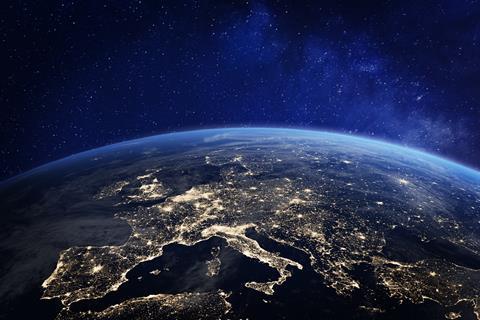
“A large event would trigger damage to property, energy, aviation, marine, agriculture, space and possibly specialty such as SRCC. Further, it would likely hit every continent at once. That is, for extreme events, diversification in the insurance industry does not exist,” the paper states.
For reinsurers, the implication is that spreading exposure across territories and classes may offer limited protection against an extreme event.
“The electric power grid represents the most critical vulnerability.
“A Carrington-scale storm today could trigger widespread and prolonged outages, with cascading impacts across transportation, telecommunications, financial services, agriculture and the broader economy.”
The paper cites a 2016 Cambridge study whose scenarios produced insured losses of $55bn–$333bn. These are illustrative modelled outcomes, rather than a forecast, with losses dependent on the extent and duration of grid disruption.
Damage triggers leave gaps
“Another important aspect is that space weather will induce economic losses without prior physical damage. This is a fundamental issue as, normally, coverage follows damage,” the report says.
That distinction makes policy wording as consequential as loss modelling. The authors call for scrutiny of physical damage definitions, supplier relationships and business interruption consequences, alongside reviews of power companies’ vulnerability and blackout procedures.
For brokers, the task is to establish how clients’ dependence on electricity and communications translates into uninsured interruption.
Parametric insurance structures could address the damage-trigger problem. The paper’s wider analysis, however, indicates that changing the payout mechanism would still leave insurers managing a potentially global accumulation of losses.
“Space weather suits parametric cover better than most perils for which this trigger mechanism already exists. The parameter used is objective and public, measured by government agencies. In most cases, the measurements are published in real time and archived.
“Since space weather generates losses without physical damage, parametric payouts may be particularly well suited,” Acrisure Re added.








No comments yet