
Reinsurance broker expects around 13 named storms this year, but warned that elevated ocean temperatures in key regions leave the market exposed to rapid intensification and landfall risk
Acrisure Re has forecast a slightly suppressed 2026 Atlantic hurricane season, after a 2025 season marked by four major hurricanes and the devastating impact of Hurricane Melissa in Jamaica.
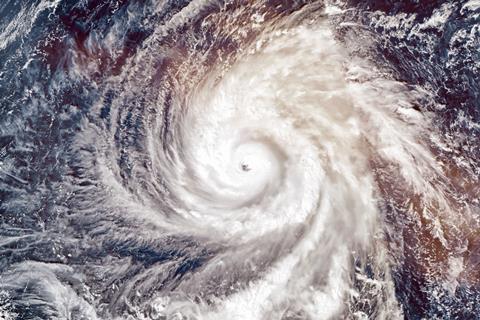
The reinsurance broker said its internal forecasting model projects around 13 named storms for 2026, compared with the long-term average of 14.
Its report said: “After a slightly above average 2025 Atlantic hurricane season, which spawned 4 major hurricanes, of which 3 strengthened to category 5 storms, including the devastating impacts of Hurricanes Melissa to Jamaica, the upcoming 2026 season is expected to bring marginally below-average activity.”
Acrisure Re said North Atlantic sea surface temperatures are not expected to reach the record levels seen in recent years, but remain above long-term averages across much of the basin.
The report said temperatures remain elevated “particularly in the western Atlantic, Caribbean, and Gulf of Mexico”.
At the same time, forecasters expect the El Niño-Southern Oscillation, or ENSO, to move into its warm El Niño phase during the peak of the hurricane season.
Acrisure Re said: “This warm state implies an increased likelihood of the hurricane-suppressing wind shear typically associated with El Niño conditions.
“The combined influence of the warmer-than-average Atlantic SSTs and the anticipated warm ENSO phase, along with other meteorological and oceanic variables, suggests a slightly suppressed North Atlantic hurricane season for 2026.”
Simon Hedley, CEO of Acrisure Re, warned that the industry should not mistake a moderate forecast for low risk.
“While we anticipate a more moderate season compared to recent years, the industry cannot afford complacency.
“The lessons of recent hurricane seasons continue to reinforce that it only takes one major storm making landfall in a populated region to create significant human and economic loss.
“Preparedness and disciplined risk management remain critical,” he added.
The broker’s report said the 2025 season produced 13 named storms, five hurricanes and four major hurricanes.
It said the season was slightly below normal by storm count, below normal by hurricane count, but above average by major hurricane count.
In accumulated cyclone energy terms, 2025 was 8% above the 1991-2020 mean, with ACE of 133.
The report said: “Overall, the 2025 North Atlantic hurricane season was above average by some measures and below normal for others, just eclipsing the National Oceanic and Atmospheric Administration’s (NOAA) definition of an above-normal season.”
Acrisure Re said Hurricane Melissa became the third Category 5 hurricane of the season and tied for the strongest winds ever recorded for an Atlantic hurricane, with peak winds of 165 kt, or 190 mph.
The study said Melissa “was near peak strength when it made landfall along the southern Jamaican coast, tying it as the strongest storm to ever make landfall in the Atlantic basin”.
It added that the storm caused at least 93 fatalities and an estimated $12.2bn of physical damage across Jamaica.
For 2026, the report said Atlantic conditions remain supportive of hurricane activity, even if they are less extreme than in recent years.
It said: “The SSTs for the Atlantic are still expected to be above average, so while expectations are not as high as last year, conditions in the Atlantic are still conducive for an above-normal season.”
Acrisure Re also warned that western Atlantic conditions could support localised storm development and strengthening.
“This year, we could see more storms form in that region and any storms that do move over that area might strengthen due to the relatively warmer waters,” the report said.
Ming Li, global head of cat modelling at Acrisure Re, said short-term atmospheric patterns would still be important.
“Intraseasonal variability and shorter-term atmospheric patterns will continue to influence when and where storms develop throughout the season.
“Although overall activity may trend closer to average, elevated ocean temperatures in key regions mean the potential for rapid intensification and impactful landfalls remains a significant concern,” he added.
Acrisure Re said its internal model uses a stratification approach that categorises historical storms into clusters based on genesis location, track and intensity.
The report said the model “projects about 13 named storms and approximately 4 landfalls”.
It added: “The clusters most associated with the expected values of the climate indices have lower peak intensity and landfalling rates, suggesting that we can expect fewer stronger storms as well. This projection is in line with the industry consensus.”
The report concluded that statistical and dynamical models, Acrisure Re’s internal forecast and a review of key climate variables all point to a slightly subdued season.
“Other analog years suggest a well-below average season, indicating that 2026 is most likely to experience a moderately subdued level of activity,” the report added.









No comments yet