
Carrick Holdings is targeting selective growth in the legacy market, as Phil Hernon argues disciplined pricing is more important than following the broader insurance cycle
Bermuda-based non-life legacy insurer Carrick Holdings has completed more than 50 insurance-related transactions across its team and provides finality solutions through entity acquisitions and loss portfolio transfers.
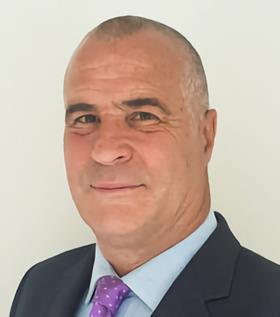
“We’re quite selective in what we write,” chief operating officer Phil Hernon says. “We like the ‘old-style’ run-offs. We have acquired similar books covering APH [asbestos, pollution and health hazard] liabilities and assumed reinsurance but have diversified with smaller books covering other lines.”
Carrick itself has completed around seven transactions over the past two-and-a-half to three years, including its recent Part VII transfer of the reinsurance contracts of IRB-Brasil Resseguros’ UK branch into Community Reinsurance Corporation, its UK carrier.
Carrick is currently raising additional capital to work alongside its current investor, as it looks to build its portfolio, but Hernon stresses that at the moment the firm remains focused on traditional legacy transactions rather than following peers into increasingly diversified strategies.
Maintaining value in the deal
Carrick is particularly focused on transactions below $100m, where Hernon believes it can compete without being drawn into bidding against significantly larger legacy acquirers.
“We prefer to source opportunities on a proprietary basis rather than through a broker, because when it comes via a broker, it becomes a highly competitive tender and you lose the value in the deal. However, if the dynamics are right we will also look at broker-led deals,” he says.
“Our competitors are usually bigger than us and they’ve got bigger balance sheets. They can afford to put low bids in; but we can’t afford to do that.”
Hernon also questioned how closely legacy opportunities should be viewed through the traditional hard and soft market cycle. “When you start seeing a soft market, legacy becomes more difficult. When you start seeing a hard market, legacy deals are more available,” he says.
But unlike a live underwriting book, he argues, a legacy acquirer cannot rely on future premium income to compensate for mistakes made when taking on liabilities.
“If you cut the price too much, you’re taking on the risk and you can’t adjust, you can’t write yourself out of a problem,” Hernon says.
“The problem’s there, and if you get it wrong, you’re going to get hurt badly.”
That distinction becomes particularly important for long-tail casualty exposures, where claims can take years to emerge and deteriorate.
“The thought process around hard market, soft market – that applies to the live market. But in the legacy market, the risk is you’re not going to get the premium. The premium is not going to keep coming in, the risk is the risk and you cannot change it,” he says.
“So, in essence, while [the cycle] does have an impact on the legacy market in seeing deals, I think the cycle disintegrates when you’re buying claims, which is what we basically do.”
New opportunities in MGAs
One growing area of interest is the MGA market, particularly where carriers providing fronting paper or reinsurers behind those arrangements decide to exit or it implodes.
“We really see that as a source of business for Carrick,” Hernon says.
He sees particular potential in long-tail liabilities that remain after shorter-tail property exposures have run off, especially as some carriers establish their own MGA platforms and reconsider external relationships.
“The short-tail property will probably have long gone. It’s going to be the paper that’s hanging on to the long-tail liabilities, and that’s where we have the skill set to price it up and hopefully deal with it and release the capital back to the paper.
“Additionally, the reinsurers sitting behind the fronting companies are another focus of our attention,” Hernon says. “There are different solutions, but it is an area where the legacy market can add value. That’s our perception anyway.”
Click here to read the full digital issue of GR’s RVS special edition 2026









No comments yet