
MGAA CEO Michael Keating says specialist underwriting, flexible cost base and access to capital should help MGAs navigate competitive market conditions
Managing general agents are prepared to trade hard through the soft market while maintaining underwriting discipline and protecting their capacity providers’ capital, according to the Managing General Agents’ Association (MGAA) CEO Michael Keating.
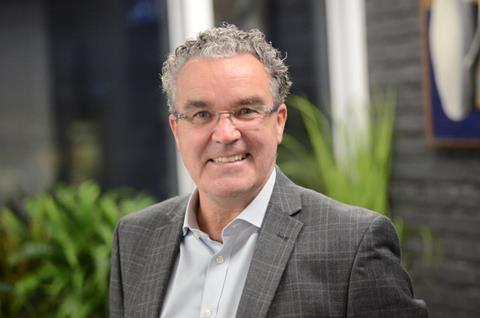
Keating (pictured) said the MGA sector remained buoyant in the UK, Europe and internationally, supported by continuing demand from both risk and investment capital.
MGAA members collectively write more than £18bn in premium income, while the association has almost 80 insurer members interested in deploying capacity through MGAs.
“Their DNA is really around specialist and niche products, laser-focused underwriting and being laser-focused on the needs of customers, whether that be direct to consumer or through the broker channel,” Keating said.
“That entrepreneurial product design, agility and ability to meet changing customer needs means MGAs are at the tip of the spear.”
However, Keating warned that MGAs could not ignore the headwinds facing the broader insurance market, including sharp rate reductions across some product areas.
“Some rates are in free fall in certain product sectors,” he said.
“It is absolutely critical that MGAs navigate that and protect capital as they are going through these turbulent times.”
Keating said members recognised that protecting their capital providers was fundamental to their survival, but were also embracing the return of more competitive trading conditions.
“A lot of my members are saying they are trading extremely hard with their brokers,” he said.
“Some of them are doing that with absolute relish because they are saying it is going back to the days when they first started out: rolling their sleeves up, working with brokers and trading as ferociously as possible on behalf of clients.”
Greater operational flexibility
Keating argued that MGAs were better equipped to withstand the current market than during previous soft cycles because their operating models had become more flexible.
Cloud-based technology and reduced reliance on expensive office space had lowered fixed costs, although businesses would continue investing in underwriting talent.
“If you look at the three biggest expenses, they are IT, premises and staff,” he said.
“MGAs will not compromise on staff because they want to attract and continue to attract underwriting talent.
“But their cost base is more flexible than it was in previous soft markets, and I think that will help them navigate these tough conditions.”
The MGAA has responded by holding webinars and masterclasses on trading through a soft market, recognising that some professionals have not previously experienced this stage of the cycle.
It has also focused on operational effectiveness, technology and regulatory compliance, including bi-monthly sessions in which members can put questions directly to the Financial Conduct Authority.
Keating said artificial intelligence (AI) should be considered not only as a means of improving efficiency, but also in terms of its longer-term implications for recruitment, training and workforce planning.
“There is a lot of hype around AI and it is here to stay, but is there enough planning and foresight around what the impact on the workforce will be?” he asked.
“What retraining needs to be done, and what does it look like in two or three years’ time?
“Jobs will disappear, but are people going to be retrained? I just do not think that debate has been addressed properly yet.”
Claims and smart capital
Keating also called for claims management to receive greater strategic attention, particularly as underwriting margins come under pressure.
“In a soft market, claims is the only lever where you can actually put margin back in,” he said.
“That is through reducing indemnity spend, reducing cycle times and having a greater focus on fraud.
“It still seems slightly back office, which I do not think is healthy.”
Meanwhile, he said the growing involvement of hybrid insurers and reinsurance-backed capacity providers was bringing reinsurers closer to the underlying customer.
Keating described this as “smart capital”, with some carriers retaining a minority of the risk while using reinsurance to support the remainder.
“Those insurers using reinsurance capital, either just fronting or taking 10% or 15% themselves, are doing it in a smart way,” he said.
“That modelling has necessitated traditional capital relooking at its own financial models, because it cannot compete on typical combined operating ratio models and expense ratios against hybrid insurers that do not have the same level of costs.”









No comments yet