
Reinsurers are increasingly looking to AI to improve workflows and data quality as softening market conditions raise the importance of operational efficiency, says chief executive
The reinsurance sector has invested heavily in sophisticated modelling and analytics, but it continues to suffer from inefficient workflows that leave highly skilled staff performing administrative tasks, according to Mea Platform chief executive Martin Henley.
Speaking exclusively to Global Reinsurance at the Rendez-Vous de Septembre conference in Monte Carlo (6 September 2026), Henley said that reinsurers were already tapping into technology well in fields such as catastrophe modelling, analytics and pricing.
However, “where it feels to me [that reinsurers are] missing a trick is around the workflow, which creates a huge operational drag around everything that happens,” Henley continued.
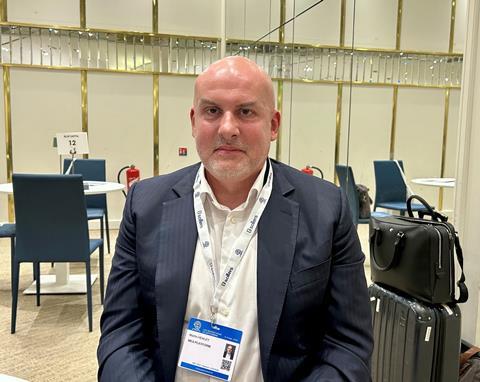
“The slips, the submissions, the bordereaux, all the unstructured data coming in. And then you’ve got expensive underwriting talent, or even highly skilled operations talent, just doing admin all day and moving things around.”
Henley said the problem was not a lack of tech-centric ambition from reinsurers, but that these businesses had often attempted to retrofit generic technology into complex insurance workflows.
Part of this puzzle is linked to the quality of data underpinning such processes, which Henley stated is central to improving technology driven reinsurance value chains.
“If you don’t get it right up front, everything downstream from there, the quality of the data gets worse,” he said.
“As [the] market is softening, this efficiency point around understanding your data in lots of detail stops really being an optional thing.”
Artificial intelligence appetite
Henley added that appetite from the reinsurance industry around artificial intelligence (AI) usage was growing too, particularly for risk ingestion, data extraction, triage and repetitive middle and back office tasks.
However, reinsurers remain more cautious about allowing AI to influence underwriting decisions directly.
“Where we’re seeing that people are still less comfortable, which is very understandable, is where you’re letting the AI near decision-making, so near the actual underwriting,” Henley said.
The market’s conversations around AI have nonetheless moved rapidly.
“If I think about the conversations we’re having now compared to even nine months ago, it’s a very, very different conversation,” Henley continued. “It’s not evangelising ‘this technology could help you’. It’s ‘we know it can help us. How do we actually make it work in our environment?’”
Henley believes insurance specific technology is becoming increasingly important, arguing that generic AI struggles to complete work concerning complex specialty risks – where explainability, auditability and accuracy are essential.
He also rejected the idea that AI adoption should principally be viewed as a headcount reduction exercise.
“Our view is actually quite different,” Henley said. “Our view is this is an opportunity to get those expert people out of doing admin and help them to drive your business.”









No comments yet