
AI-native insurers can use more granular data to improve risk selection, customise coverage and stabilise markets facing affordability pressures from hurricanes and climate-related perils, according to Lilypad’s Rajiv Matta
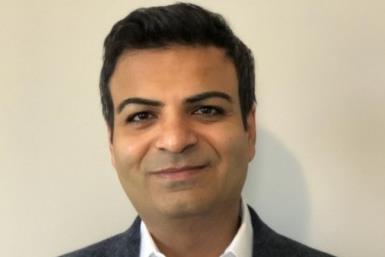
Artificial intelligence can help insurers move beyond broad-brush responses to climate losses and design more affordable coverage around the characteristics of individual properties and businesses, according to Lilypad chief innovation officer Rajiv Matta.
Matta (pictured) said Lilypad’s description of itself as an “AI-native” carrier meant examining every part of the insurance process to determine whether technology could make it more efficient.
Lilypad, an admitted property and casualty carrier focused on coastal property coverage, offering homeowners, condominium association and commercial products. Its parent company, Arbol, also provides parametric and indemnity-based wildfire solutions in areas where other insurers have withdrawn or left protection gaps.
“Every process and procedure we have, the question being asked is: can we do that using AI, and do it in an effective way?” he told GR.
“We’re in a regulated industry and we want to ensure our use of AI is transparent, auditable and observable. But at the same time, is it going to be more efficient than us doing it manually or using an AI agent to do it?”
One avenue to progress, he suggested, is policy form development, a process that previously took Matta about a month to reach the initial drafting stage.
“Now it takes between a day and three days maximum to get a starting point for forms that a legal team can review,” he said.
“We have an AI agent that has competitor forms information loaded into it. It has claims data loaded into it. You can type in a query and ask it to build a starting point for a policy form, using all the data that we have fed it and industry data, and then keep fine-tuning it.”
The technology is also being used to process commercial insurance submissions before they reach an underwriter.
“You still have a lot of carriers where an email submission is sent to an underwriter, who reads it and spends a lot of time analysing that data before making a risk, pricing or underwriting decision,” Matta said.
“We have an AI agent that does all of that before it gets to the underwriter’s desk. It takes care of the unstructured data, reads it, completes and augments it, does some of the pre-underwriting, and then serves it to the actual underwriter,” he added.
From regional averages to individual risks
Matta said Lilypad’s relative youth has allowed it to embed AI without having to overcome incompatible legacy systems and decades of previous technology infrastructure.
The greater opportunity, he suggested, is to redirect insurance resources away from administration and towards risk analytics, loss mitigation and product development.
Property insurers have traditionally collected detailed information via inspections and mitigation reports but struggled to incorporate these into underwriting because they are contained in lengthy documents or disconnected systems.
“Rarely do you actually use that information in real time for coverage design or pricing decisions, because it’s a PDF that’s 40 or 50 pages long,” Matta said.
“AI can go through a 40-page report in a second or two; that’s the power of having granular data and leveraging it, instead of relying on coarse data at a one-kilometre grid or ZIP code level.
“Now we can zoom into the property with the data we have, and the data collected by various different sources, and process it,” he said.
That capability could allow insurers to distinguish more effectively between properties within the same climate-exposed region, rather than responding to catastrophe losses with rate increases across an entire postcode or geographical area.
AI can similarly support the development of parametric products addressing losses for which no physical damage has occurred.
Matta cited a restaurant whose revenue falls because excessive rainfall reduces customer footfall. AI could analyse the business, its location and revenue profile before recommending a suitable rainfall trigger and coverage level.
“It is using a lot of large data that would take a human underwriter quite a significant amount of time to design a specific cover,” he said.
“You can go to an insured and say: you have a restaurant in Miami located on this street, and we feel that if you have a rainfall parametric trigger based on this specific number of inches, you can protect your revenue if this happens.
“That is where AI is really bringing this to life in real time, instead of it being a bespoke solution that an underwriter has to work through,” he said.
Tackling affordability and market volatility
Better use of data could help the industry address the affordability problems and sharp underwriting swings that have affected climate-exposed regions, Matta believes.
“The whole industry has been bogged down with processing for a long, long time,” he said.
“The focus has not been on granular risk analytics, risk mitigation, loss mitigation, servicing clients and designing appropriate coverages. A lot of that has been outsourced to a few vendor firms to do the modelling and research, and there has not been a lot of research and development investment,” he added.
AI could also allow insurers to clear that administrative backlog and concentrate resources on underlying insurance problems.
“We have real issues to solve around affordability, brand new risk analytics and appropriate coverages, and avoiding these cycles of risk-on, risk-off to make sure there is a stable, functional insurance market,” Matta said.
The same analytical capabilities can strengthen discussions with reinsurers by providing more detailed evidence about the risks being ceded.
“It gives us an edge because we are providing the reinsurance market with risk underwriting capabilities that allow them to understand the risk better and price it better,” Matta said.
“It gives them some certainty that we are filling as many gaps as possible from an underwriting or risk-parameter perspective.
“Data is king; it has always been king,” he said. “It has just always been a challenge to process large amounts of data and bring all of it together at the right time to make the right decisions and design the right coverages. That is what AI solves for right now.”









No comments yet