
New OAK Horizon unit gives the Lloyd’s start-up a cross-class platform for climate and technology risks, with CUO Tom Dickson arguing that parametric, portfolio-based and more bespoke structures will be needed where conventional cover struggles to keep pace
OAK Global has launched OAK Horizon, a new strategic business unit aimed at underwriting climate and technology-related risks across property, specialty and credit lines.
The Lloyd’s market start-up reinsurer is positioning itself around what it sees as some of the defining risk drivers of the coming decades.
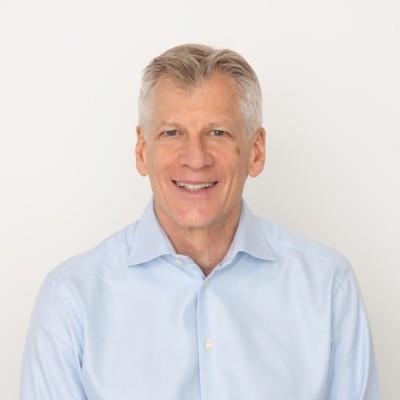
Tom Dickson (pictured) has taken on the role of chief underwriting officer (CUO) of OAK Horizon, alongside his existing position as president, innovation strategies for OAK Global.
The press release sets out a broad proposition, while GR spoke with Dickson to furnish further details.
OAK Horizon will use OAK’s existing Lloyd’s syndicates and draw on a proprietary framework for identifying climate and technology-aligned risks.
The new entity will write products spanning catastrophe protection for evolving natural perils, parametric covers, energy and power financing and performance, technology-aligned asset protection and public sector partnerships.
Dickson underlined that it will also seek capital partners as the venture develops.
What makes the launch more interesting than a standard new unit announcement, is the way Dickson describes the strategy behind it.
Rather than treating climate business as a typical natural catastrophe play, he argues that OAK is trying to build around the interaction between climate change, digitalisation, infrastructure transition and emerging technology.
“Climate and technology,” he said, are increasingly “an ecosystem where there are so many feedback loops,” with changing wildfire, flood and weather patterns affecting sectors from agriculture to transportation and logistics, while new analytics and infrastructure are also reshaping how those risks are managed.
This combination “allows you to have new risk products, like parametric solutions, where you’re looking at new data sets that aren’t really fully embedded in the insurance and reinsurance world”, he added.
Cross-class by design
This logic helps explain why Horizon is being built as a cross-class strategy rather than a specialist book confined to one line.
Dickson said the intention was to create “a distinct, diversified, profitable portfolio” rather than simply pick off renewable energy assets or climate-exposed risks one by one.
“We see them so interconnected that we want to create a portfolio that reflects that,” he said. “And therefore you kind of have to be cross class if that’s what you want to achieve.”
In practice, Dickson said the areas most heavily represented are property, marine and energy, innovation and transition.
For OAK, innovation is essentially parametric, while transition is tied to infrastructure and energy change within the Lloyd’s framework.
This is almost all treaty business, he emphasised, with some limited use of facultative when this meets client needs. Cedants are expected to include commercial and specialty carriers, syndicates and MGAs.
Dickson described OAK as “a portfolio risk underwriter”, suggesting Horizon is not being pitched as a branded sidecar for fashionable climate business.
Instead, OAK appears to be building a structured portfolio-level reinsurance offering, emphasising harder-to-place pockets of demand that sit between established classes and newer forms of exposure.
Parametric moves further into the mainstream
Use of parametric mechanisms is key to the plans, an innovative form of insurance linking payouts with pre-set triggers based on agreed indices.
Dickson acknowledged that parametric, although promising, has not yet used to the scale talked about by its exponents.
His argument was not that parametric solves everything.
He acknowledged the familiar hurdle of basis risk, describing the key question for buyers as “is it going to respond when I want it”.
But he also made the case that the structure is especially useful where traditional indemnity insurance lacks the history, claims infrastructure or product wording needed to support a meaningful market.
“What we’re seeing is that the parametric structures provide quick payment resolution,” Dickson said. “It’s an effective way to address risks that don’t have a history in the insurance and reinsurance market around evaluating indemnity or a delivery mechanism.”
He pointed to wildfire as a good example, saying there were already products that were effectively first to market in helping address that risk.
“When you have an event like that, it’s difficult to figure out all of the cascading effects and impacts on an indemnity basis,” he said. “But you can, when the event is severe, have a really effective solution on the parametric side.”
Dickson said the same dynamic could be seen in agriculture and supply chain-related exposures, where parametric can act as “a great stepping stone” before fuller indemnity frameworks mature.
That is a useful way of thinking about the product, he emphasised: not as a niche alternative to conventional insurance, but as an entry point for risks that the market has not yet learned to absorb in a more standardised form.
Climate perils and emerging technologies
Dickson provided a clearer sense of where Horizon expects demand to come from. He cited wildfire, flood and broader weather-related risks, including drought and excess rainfall, alongside energy-related exposures and more novel technology-linked risks.
On larger catastrophe-style events, he suggested public-private partnership structures may become important, arguing that the public sector can play a role but cannot or should not become the long-term answer on its own.
“It’s difficult for the public sector to be the enduring risk solution,” he said. “One of the things we’d like to do is use this as a vehicle to bring more private sector capital back in, in the right way, to assume those risks.”
The same philosophy carries across into emerging technologies.
The press release references data centres and nuclear fusion as notable examples, and Dickson said the common feature is that these are the kinds of risks that “challenge the current market”, whether because of coverage design, limited loss history, or the fact that new technologies usually arrive with new business models.
In those cases, he said, underwriting requires outside data, product innovation and pricing approaches that go beyond conventional insurance datasets.
“There are now parametric products around data centres because they are capping out the conventional capacity,” he added.
Pressed on goals for premium volume, he said OAK is less focused on premium targets than on building the platform and proving the portfolio internally before bringing in outside capital.
“We have the portfolio, and going forward, we hope it’s a vehicle to aggregate some capital to deliver into these sectors, in this portfolio. The demand is, frankly, going to outstrip supply for the foreseeable future,” Dickson added.









No comments yet