
Report from the re/insurance broker highlights rising losses and widening protection gaps across key regions
Aon has warned that intensifying floods and droughts are reshaping global risk patterns, as climate volatility drives rising losses and more complex underwriting challenges.
The broking firm’s latest “Climate and Catastrophe Insight” report shows that global economic losses from flooding exceeded $42bn in 2025 and have surpassed $2trn since 2000.
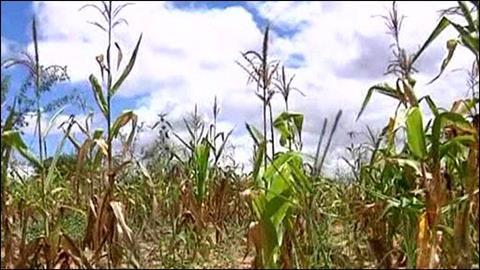
Drought is also emerging as a major driver of secondary peril losses, contributing $13bn in economic damage in 2025 alone, with wider impacts across sectors including energy and agriculture.
The report highlights a shift in the risk landscape, with flood increasingly dominating loss activity across multiple regions.
In the US, Aon’s modelling suggests pluvial flood risk could rise by around 12% under a medium emissions scenario and 19% under a high emissions scenario by mid-century.
The country recorded 14 separate 24-hour rainfall events equivalent to a one-in-1,000-year flood in 2025, the highest number since 2002.
Flooding also drove China’s largest loss event of the year, causing an estimated $14bn in damage, while projections indicate rising exposure to extreme precipitation across parts of Africa.
Despite increasing losses, the report highlights significant protection gaps.
In US counties that received payouts from the National Flood Insurance Program in 2025, only 2.6% of residential properties were insured under the scheme.
At the same time, private flood insurance has expanded, with the number of policies and premiums more than doubling between 2020 and 2024.
Michal Lörinc, head of catastrophe insight at Aon, said the growing impact of flood risk is driving innovation in modelling and product development.
“Flood has become an increasingly impactful natural hazard over the past three decades, and in response Aon has have developed a wide range of innovative products and coverages to help our clients recover faster and more fully from flood events,” he said.
“Catastrophe modelling is also an area in which we continue to make significant investment, helping to bring clarity to our clients’ flood exposures and thereby aiming to affect better business decisions,” he added.
The report also points to the need for stronger coordination between public and private stakeholders to address resilience challenges.
Andy Neal, managing director of public sector partnership at Aon, said policy responses will be critical.
“Political uncertainty compounds the volatility of natural disasters,” he said.
“For policymakers, coordination between the public and private sectors will be increasingly important to expand coverage, invest in resilient infrastructure and use risk insights to inform planning decisions,” Neal said.
“Those that act early are better positioned to protect communities and economies over the long term,” he continued.
Liz Henderson, head of climate risk advisory at Aon, said insurers must adapt to a changing risk environment.
“Climate variability is increasingly influencing insurers’ business models, and these natural catastrophe trends point to a more structurally complex risk landscape where traditional views of risk, based only on historical experience, are no longer sufficient,” Henderson added.









No comments yet