
Energy clients across the Middle East are reassessing political violence, business interruption and contingency planning after regional conflict exposed the limits of traditional physical damage cover, a DWIC Connect Istanbul panel heard.
Energy clients across the Middle East are reassessing political violence, business interruption and contingency planning after regional conflict exposed the limits of traditional physical damage cover, a DWIC Connect Istanbul panel heard.
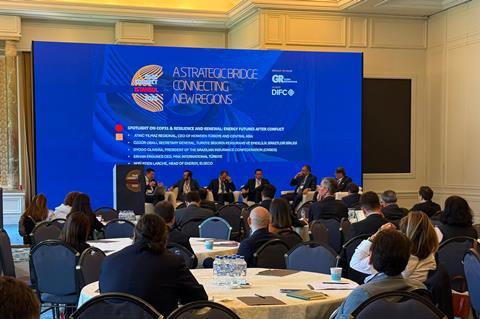
Erhan Ergunes, CEO of MNK International Türkiye, said recent disruption had forced insurers and clients to look at risks more holistically.
“There is no physical damage, but still the traffic stops. Therefore, [the focus is] business interruption, disruption and other losses,” he said, pointing to ships and cargoes being unable to move in or out of the Strait of Hormuz.
“Many of these things were not covered under existing policies. The first question clients are asking whether I’m insured by this policy or not.”
Atinc Yilmaz, regional CEO of Howden Türkiye and Central Asia, suggested client insurance awareness had increased, with buyers asking whether maritime, storage and political violence exposures were adequately covered.
Looking ahead 24 months, he expected tighter focus on limits, security questions and resilience planning.
“They should also start to discuss about the risk scenario analysis, disaster recoveries, contingency plans,” Yilmaz said. “Insurance will not be sufficient at one stage, they should have their alternative scenarios already.”
Sebastien Larche, head of energy at Elseco, said energy insurers faced complications around force majeure, valuation and delayed projects, particularly where supply chain disruption increased rebuilding costs.
Despite the conflict, Larche said the broader market remained competitive.
“We are in a softening environment and there is still lots of capacity available,” he said.
The panel also expected disruption to accelerate investment in alternative routes, pipelines, renewables and storage.
Dyogo Oliveira, president of the Brazilian Insurance Confederation, said instability in oil supply would strengthen the energy transition case.
“I see exactly this happening: more investment in renewables, more diversification of sources,” he said. “All of these projects require different kinds of insurance.”
Insurance sector takes COP30 lessons to COP31 Antalya
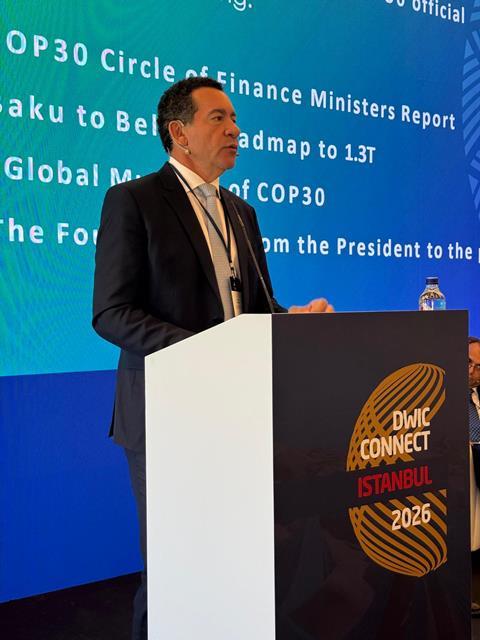
The insurance sector should use COP31 in Antalya to inform and strengthen its role in climate resilience, narrow protection gaps and demonstrate its value, speakers told DWIC Connect Istanbul.
Dyogo Oliveira (pictured), president of the Brazilian Insurance Confederation, reflected on the sector’s recent experience at COP30 in Belém, arguing that participation had helped insurers engage with other industries while improving understanding of their role.
“We are already doing it, but we are not showing people what we are doing,” Oliveira said of insurers’ contribution to climate resilience.
He said the sector had used its ‘House of Insurance’ to bring together insurers, governments and industries affected by climate change, with more than 60 panels held during the conference.
A key lesson was engagement beyond insurance.
“For every day in the House of Insurance, we had a different sector presenting what are their challenges, what are the consequences they are suffering, what are the opportunities for us to build together solutions and create new markets for insurance,” Oliveira said.
Özgür Obalı, secretary general of the Insurance Association of Türkiye, said COP31 should build on that work, with protection gaps central to the agenda.
“This is why climate risk must be treated as a systemic financial risk, not only as an environmental issue,” he said.
“No single institution can close this protection gap by itself; we have to gather collective capacity.”
Obalı identified stronger data and risk evidence, more inclusive products and public-private partnerships as strategic priorities, alongside catastrophe bonds and climate risk modelling.
He said Antalya could become more than an event venue, serving as a meeting point for insurers, financial institutions, industry, government and technology companies.
The planned Insurance House would showcase risk and resilience solutions and focus on practical action.
“We need to focus on how insurance can be linked to specific COP31 priority areas through concrete examples,” Obalı added.









No comments yet