
Verisk estimates onshore insured property losses of $1bn-$2bn, while Gallagher Re expects a broader insured total at the lower end of the low-to-mid-single-digit billion range
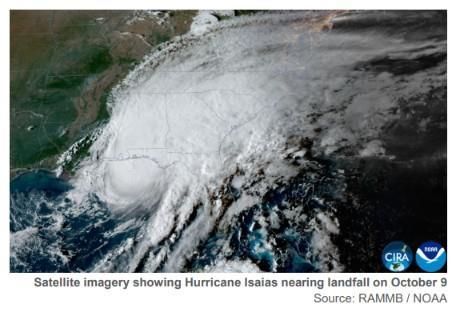
Hurricane Isaias is expected to generate insured losses in the low billions of dollars following its category two landfall in the Florida Panhandle, according to estimates from Verisk and Gallagher Re.
Verisk put insured industry losses to onshore property at between $1bn and $2bn, including wind and privately insured storm surge.
Gallagher Re, using a broader loss definition that also incorporates inland flooding, tornadoes and National Flood Insurance Program losses, said insured losses are expected to settle “on the lower end of the low-to-mid-single-digit billion range”.
The reinsurance broker said Isaias’ slightly eastward track away from the more densely exposed Pensacola area, combined with its relatively compact core, reduced the potential severity of the event.
“The storm’s slightly eastward track away from the densely exposed city of Pensacola, combined with a relatively low radius of maximum winds, meant that a less populated part of Florida bore the brunt of Isaias’ peak winds,” Gallagher Re said.
Catastrophe risk modeller Verisk also expects wind to account for the vast majority of insured losses.
Its analysis found the most severe wind damage occurred west of the landfall location, particularly in Santa Rosa and northeastern Escambia counties, with impacts including roof and structural damage, fallen trees and widespread debris.
Isaias made landfall near Destin, Florida, on 9 October with maximum sustained winds of 105mph after earlier reaching Category 3 intensity with winds of 120mph.
Gallagher Re said comparable historical storms striking this part of the northern Gulf Coast have produced insured losses of between $2bn and $4bn on a normalised basis.
Hurricane Dennis, which struck close to Destin in 2005, would generate an estimated $3.4bn insured loss if repeated under current socioeconomic and macroeconomic conditions, according to its analysis.
Protection gap widens economic impact
The two estimates differ partly because of their scope.
Verisk excludes precipitation-induced flooding, US National Flood Insurance Program (NFIP) insured losses, tornado losses and offshore assets, among other categories.
Gallagher Re expects the overall direct economic cost, including uninsured and underinsured damage, to run around 40%-50% above the eventual insured total.
“This differential is expected to be heavily linked to damage caused by storm surge and inland rainfall-driven flooding,” Gallagher Re said.
It highlighted low flood insurance penetration across affected areas, with NFIP take-up rates generally ranging from 10%-25% in coastal parts of Alabama, Mississippi and the Florida Panhandle, before falling to 2%-5% or less across many inland counties.
Nearly 900,000 customers lost power at the peak of the event, while Gallagher Re recorded rainfall totals above 12 inches in some locations, storm surge reaching 5.57 feet at Panama City Beach and at least 21 tornadoes across the Southeast.
Despite the multi-billion-dollar loss potential, Gallagher Re expects little impact on the 1 January reinsurance renewals.
“Record levels of traditional and alternative capacity have left the sector well positioned to absorb moderate catastrophe losses,” the broker said.
“As a result, even the prospect of a multi-billion-dollar loss from Isaias will not materially alter pricing expectations, capacity availability, or broader market sentiment heading into 2027.”








No comments yet