
Facultative reinsurance is increasingly being used as a tool to support insurers’ growth, manage capital and complement treaty programmes as part of a more connected overall reinsurance strategy, according to Aon’s Reinsurance Solutions senior facultative leadership.
“Every single insurance company has growth targets and wants to write more of its existing and new business at profitable terms,” says Nick Fraccalvieri, Aon’s CEO of global facultative.
That strategy is becoming more challenging as rate declines across most classes of business, in some cases by double-digits, he continued.
At the same time, new entrants are adding capacity as they also seek profitable growth, further intensifying competition in an already soft environment. Fraccalvieri believes one of the most effective ways for insurers to navigate the current market cycle is to write more of the same business.
“You need to write bigger lines to maintain relevance and be much more forward-looking in front of brokers and clients,” he says. “This naturally puts more pressure on your balance sheet, on the underwriting methodology, on the capital necessary to support big lines.”
That, in turn, is creating strong global demand for facultative reinsurance.
“The biggest opportunity for insurers is to buy more facultative to ventilate their exposure, manage their balance sheet better, leverage the strength of abundant reinsurance capacity better,” he says.
His colleague Mike Reid, Aon’s EMEA CEO of facultative reinsurance, is seeing insurers take an increasing deliberate approach to using facultative to manage individual portfolio outliers alongside treaty protection. Insurers are no longer necessarily choosing between treaty, facilities and single risk facultative solutions to improve overall portfolio outcomes.
Reid describes the current market environment plainly. “It’s a buyer’s market, with plenty of capacity and availability, and clients can negotiate the best possible terms,” he says.
Nevertheless, pockets of harder conditions remain. US casualty as an obvious example, particularly because US exposures can extend well beyond domestic US portfolios.
“If you have any organisation anywhere in the world that is multinational in nature, or trades with the US market, it gives them effectively a US casualty exposure, and this is an area that treaty reinsurers are increasingly focused on,” Reid says. “Cedants can use facultative solutions to remove some of this exposure from those treaty discussions.”

FROM TACTICAL TO STRATEGIC
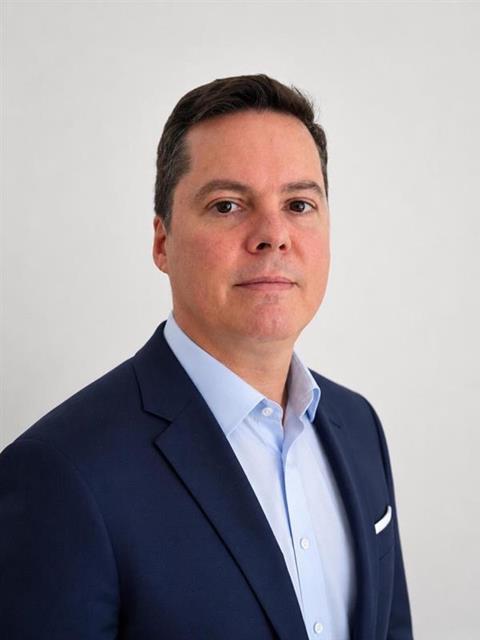
Reid joined Aon from Sompo in July, taking on Fraccalvieri’s previous EMEA role, after almost 30 years on the underwriting side of the market.
That experience, he says, has reinforced the challenge of creating truly homogeneous insurance portfolios.
“Outside of one or two sectors, whether it’s personal lines or micro-SME business, it’s really difficult to build a homogeneous portfolio,” Reid says.
“Treaties are great tools, particularly for portfolios that are stable and easy to identify, and they’re quite homogeneous. More and more often it’s the outliers in a portfolio that cause the issue, whether that’s geography, a product, a particular set of clients with limits and what they require.”
That is also changing how insurers think about facilities. Rather than using facultative solely on a risk-byrisk basis, insurers are increasingly using facultative facilities to provide committed capacity, greater consistency, and greater efficiency in protecting those outliers.
“Facultative is clearly becoming a strategic tool, and the increasing demand for facilities shows that clients are reflecting on how best to manage the need for facultative while also protecting their counterparty risk,” Fraccalvieri says. “Facilities provide that solution, achieving stability, efficiencies and a forward-looking approach to take more risk.”
Facultative reinsurance has often been perceived as administratively burdensome, but digitisation and the development of facilities, including proprietary facilities, are reducing that friction and making repeated purchases easier.
“Single risk facultative and facilities are more creative tools that you can efficiently use through your underwriting year,” Fraccalvieri says.
Aon is also seeing increased demand for facultative from those insurers looking to expand in new classes of business or geographies. The same applies when carriers enter new territories or lines of business, where they may lack the scale and experience needed.
“When you move outside your comfort zone, you’re going to have a problem of not having enough critical mass to underwrite businesses you don’t know very well,” Fraccalvieri says. “Facultative is playing a critical role there to support their growth.”
CAPITAL AND DEMAND
Fraccalvieri says Aon intermediates more than $6bn of facultative premium and has around 1,000 people working in facultative across 44 countries, giving the broker insight into buying behaviour across different markets.
“That ability to understand what’s going on at local level, at regional level, and at global level, is unique to us and serves our local, regional and global clients well,” he says.
“They are looking to have us support their strategy with this insight.” Capital conversations are increasingly driven by portfolio data rather than more traditional approaches to protection, says Reid.
“There isn’t one size fits all. Every client is going to be unique, and so we see the decision-making now is much more highly linked to the data and the insights.”
This means facultative brokers are increasingly involved at an earlier stage in capital discussions.
“What does the portfolio look like? How exposed is it to different events? Is it more short-tail focused or long-tail focused?” Reid says. “Attritional losses can destroy capital, just in a different way, and you will see cedants start to protect themselves using facultative.”
Reid also argues that single risk facultative and facilities should not be seen simply as products for a particular phase of the pricing cycle.
“We’re agnostic about the market cycle. We think single risk facultative and facilities are important and will continue to play their important role through the cycle. We’re going to continue to see those as strategic.”
GROWTH OPPORTUNITIES
For Reid, the clearest current theme is growth.
This includes insurers expanding into mid-market business, where they may be expected to write 100% of individual risks rather than rely on syndication or co-insurance.
Growth opportunities are broad, but Reid highlights construction, particularly data centres, as a strong area because of project scale, complexity and capacity requirements.
Within EMEA, he points to France, the Nordics and the Middle East. How facultative continues to be used can vary according to market conditions, he suggests.
In a hard market, insurers may use it to increase available line size or remediate portfolios. In softer conditions, it can help offset pressure on technical rate adequacy and enable insurers to deploy more capacity while managing balance sheet volatility.
For Fraccalvieri, technology is an important part of making this model more efficient. Aon has been investing heavily in technology and plans to enhance their current facultative proprietary platform to include additional automated processes from data ingestion through slip production and broker placement guidance.
“We want to create efficiencies, so that our clients have clarity on what they are buying, achieve best terms, secure best counterparty risk, all managed by their best brokers in a dynamic and efficient environment,” he says.
The objective, he adds, is to speed execution at best terms while generating deeper data insight. That points to a broader evolution in the role of facultative reinsurance.
Once viewed largely as tactical solution for individual risks that sat outside treaty parameters, facultative is increasing becoming embedded in insurers wider capital, underwriting, and growth strategies.
Insurers are moving away from a binary “treaty versus facultative” mindset towards a combination of treaty, facilities and single risk facultative.
In a market where capacity is abundant but profitable growth remains difficult, the ability to deploy facultative selectively, and increasingly at scale through facilities and technology, may prove less a contingency than a core competitive tool.
Click here to read the full digital issue of GR’s RVS special edition 2026.









No comments yet