
AI-informed physical models can help re/insurers keep pace with climate change, but Karen Clark argues that transparency, frequent updates and real-world validation are essential if the technology is to improve underwriting decisions
A leader in the evolution of cat models, Karen Clark, CEO of KCC, says this enhancement matters particularly for frequency perils, including severe convective storm (SCS), wildfire and winter storm.
“Catastrophe models were invented specifically for low frequency, high severity events – hurricanes and earthquakes. These are events for which there is little historical data.”
The original modelling approach was primarily statistical, using a predetermined set of parameters, but the constantly changing physical characteristics of SCS make them difficult to represent through parameter-based methods.
Data refreshed daily

KCC has developed physical models that use hundreds of equations describing atmospheric processes, alongside volumes of high-resolution, four-dimensional data covering the atmosphere and its evolution – the fourth dimension being time.
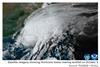
These models can simulate hypothetical events but also reproduce real weather as it occurs. SCS claims occur almost every day in the US, creating a richer body of observations through which models are tested.
KCC’s SCS model ingests over 30 gigabytes of data each day and produces hail, tornado and wind footprints insurers use to estimate their claims and losses.
“Our models are refreshed on a daily basis with the most current data to reflect climate change and other trends. Months after these events, insurers can compare their actual claims with what the KCC model says. That is very powerful. You can’t get that feedback loop with hurricanes and earthquakes to the same extent.”
The accumulated data provides the foundation for applying machine learning to models. “You cannot implement AI techniques without data,” Clark says. “We are now applying AI and machine learning techniques, not to radically change the physical models, but to enhance them.”
The resulting products are described by KCC as AI-informed physical models. The objective is to use machine learning to identify patterns or relationships that the physical equations do not fully capture, while retaining the scientific structure and transparency of the underlying model.
“Physical models are an order of magnitude better than statistical models, but they are not perfect,” Clark says. “AI can help in areas where the equations alone are not giving you perfect accuracy. We can utilise AI to find patterns that the equations do not detect.”
Training AI to work for you
However, she rejects the idea that modellers can simply feed information into an algorithm and it will produce a credible catastrophe model. “We are not blindly throwing AI at the data. You have to train the AI to give you the insights you want to find,” she says.
KCC can compare its simulated footprints directly with insurers’ real-world claims. “We can apply AI techniques and inspect whether we are getting improvements in accuracy. We are not using AI as a separate black box. It is combined with the knowledge we already have from the physical models,” Clark adds.
Greater speed of learning has implications for how frequently insurers and reinsurers update their catastrophe models. KCC has been updating its atmospheric peril models every two years and is moving towards annual releases.
“With AI, we are learning much faster than historically. We can capture climate change impacts and other environmental trends in real time. Today, if your models are even two years old, you are behind the trend,” she says.
“There have been model updates that led to big swings and disruptive changes in loss estimates. You can’t have that if you are having frequent model updates. Models will never be perfect, but the KCC AI-informed physical models are getting closer. We are willing to put our models on the line with every event.”
Click here to read the full digital issue of GR’s RVS special edition 2026








No comments yet