
Synthetik Insurance Technologies has warned that traditional political violence and terrorism modelling may fail to capture the step change in loss severity facing data centres when blast effects move from external damage to internal structural impact
Data centres require a more engineering-based approach to probable maximum loss assessment because their risk profile under political violence and terrorism scenarios is being reshaped by concentrated values, sensitive internal systems and the growing accessibility of conventional weapon threats, according to Synthetik Insurance Technologies.
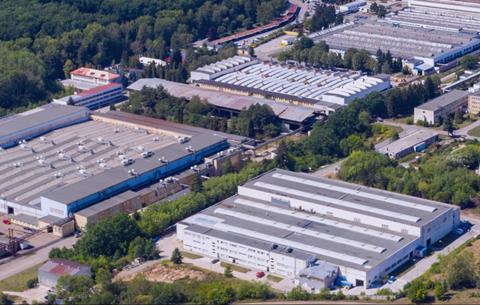
In its whitepaper, “Quantifying Political Violence and Terrorism Risk in Data Centres”, Synthetik said: “Data centres have become critical infrastructure assets underpinning the global digital economy.”
Their concentration of value, reliance on sensitive systems, and requirement for continuous operation create a distinct risk profile under political violence and terrorism scenarios, the risk analytics firm said.
The paper cited growing accessibility of conventional weapon systems, including rockets, missiles and uncrewed aerial systems, introduces hazards that are not well represented by traditional templated approaches.
It added: “These threats are characterised by impact, potential penetration, and resulting blast effects that interact with data centre structures and contents in ways that are highly dependent on weapon type, structural form, and construction materials.”
Synthetik argued that PML analysis for data centres must explicitly represent how a threat scenario interacts with the building itself.
“This paper examines the rationale for adopting an engineering-based approach to probable maximum loss (PML) assessment for data centres, in which the interaction between hazard and structural behaviour is explicitly represented to provide a more detailed and defensible assessment of damage and loss,” the report said.
The key distinction is whether explosive effects remain outside the structure or enter the facility.
The paper said: “Where structural integrity is maintained, damage is typically localised. However, where structural breach leads to the development of internal damage conditions, damage can propagate across a much larger portion of the facility, resulting in a fundamentally different loss profile.”
That distinction matters because the operational value of a data centre is heavily concentrated in internal equipment and systems, including servers, cooling infrastructure, power distribution and network hardware.
“Even relatively modest levels of shock, vibration, or pressure loading can result in functional degradation or failure,” Synthetik said.
The whitepaper said engineering-based PML analysis indicates that direct hits, near-miss external airblast and penetration followed by internal detonation can produce materially different damage states.
It added: “This transition represents a step change in loss severity rather than a linear increase with hazard magnitude.”
“Relatively small changes in scenario characteristics, such as detonation location, penetration behaviour, or structural performance, can therefore result in disproportionately large changes in loss outcome.”
For insurers, brokers and reinsurers, the paper said this has direct implications for underwriting, pricing and portfolio management.
“For underwriting, this implies that differentiation between data centre risks cannot be based solely on hazard exposure or geographic location,” Synthetik said.
“Greater emphasis must be placed on structural configuration, including roof and façade characteristics, and the potential for penetration under credible threat scenarios,” continued the paper.
Synthetik added: “Assets that appear similar under conventional modelling approaches may exhibit materially different risk profiles when these factors are considered.”
“As digital infrastructure continues to expand in both scale and importance, accurately characterising political violence and terrorism risk for data centres depends on explicitly representing how threat scenarios interact with structural elements and give rise to internal damage conditions,” the paper concluded.









No comments yet