
CUO of ATIDI Benjamin Mugisha argues that Africa needs more accurate risk assessment, stronger risk mitigation tools and greater reinsurance confidence to unlock long-term private investment across infrastructure, energy and trade
As policymakers, investors, insurers, reinsurers and development finance institutions prepare to gather in Nairobi for ATIDI’s 26th Annual General Meeting, it is an appropriate moment to reflect on one of the most important questions facing the continent: what will it take to build a more resilient and investable Africa in an increasingly uncertain world?
The answer is not simply more capital. It is more confidence. Despite representing some of the world’s fastest-growing economies and most compelling long-term investment opportunities, Africa continues to attract less private investment than its development ambitions require. Too often, risk is assessed through broad perceptions rather than country-specific realities, resulting in a persistent risk premium that can make projects more expensive to finance and discourage investment altogether.
Yet Africa does not suffer from a lack of opportunity. Across the continent, governments are investing in energy systems, transport infrastructure, industrial development and digital connectivity. The challenge is ensuring that investors, lenders and insurers have the confidence to participate at scale.
Confidence at scale
Reducing risk is therefore not simply a defensive exercise. It is one of the most effective ways to unlock investment. Credit insurance, political risk insurance and guarantee mechanisms remain among the most direct tools available for lowering Africa’s risk premium, improving financing conditions and attracting long-term private capital into sectors that are essential for economic growth.
Nowhere is this more important than in infrastructure and energy financing. Africa faces a significant infrastructure financing gap, while demand for reliable power, transportation networks and digital infrastructure continues to grow. At the same time, governments are pursuing ambitious energy transition strategies that require substantial private sector participation. The challenge is not a lack of projects or investment opportunities. It is creating the confidence and risk-sharing mechanisms that enable capital to flow into them.
A fast-evolving landscape
The good news is that financing structures are evolving. Increasingly, we are seeing blended finance solutions that combine public, private and philanthropic capital alongside risk mitigation instruments. These structures help address concerns around political risk, payment risk and creditworthiness while making projects more bankable.
Guarantees and credit enhancement mechanisms play a particularly important role. By allocating risks to the institutions best placed to absorb them, they improve project economics, extend financing tenors and bring new investors into markets that may previously have been considered too challenging. In many cases, the opportunity itself is not the barrier. The barrier is confidence.
One area where this is particularly evident is renewable energy financing. Across many African markets, the long-term investment case for renewable energy is compelling, supported by growing demand for power, abundant natural resources and ambitious national energy transition plans. Yet projects can still struggle to secure financing when investors are concerned about payment risks within the electricity value chain.
Regional liquidity support
This is precisely the type of challenge that risk mitigation mechanisms are designed to address. ATIDI’s Regional Liquidity Support Facility (RLSF) was established, with support from KfW Development Bank and the Norwegian Agency for Development Cooperation (Norad), to protect renewable energy Independent Power Producers against the risk of delayed payments by state-owned power utilities. While such payment risks may appear operational in nature, they can have a significant impact on project bankability and investor confidence. By providing a credible mechanism to manage these risks, RLSF helps improve financing conditions, attract investment and ensure that viable renewable energy projects can reach financial close.
The broader lesson is an important one. Investment decisions are often less about whether opportunity exists and more about whether specific risks are being managed with sufficient precision and credibility. When investors can clearly understand how risks are allocated and mitigated, capital becomes far more willing to participate.
Infrastructure and trade
The same principle applies across infrastructure, trade and sovereign financing. Increasingly, we are seeing blended finance structures that combine public and private capital alongside conducive regulations and risk mitigation instruments to unlock investment that might not otherwise occur. Earlier this year, for example, ATIDI supported a €570m multi-currency financing package for Côte d’Ivoire through a structure combining an African Development Bank Partial Risk Guarantee with ATIDI’s credit risk insurance. Transactions such as these demonstrate how African-led financial institutions can help mobilise private capital at greater scale and on more favourable terms, while supporting national development priorities.
This becomes even more relevant against a backdrop of global uncertainty. Higher interest rates, geopolitical tensions and slower global growth have made investors more selective across all markets. Yet periods of uncertainty also create opportunities for investors willing to take a longer-term view.
Africa’s demographic growth, urbanisation trends, natural resources, renewable energy potential and expanding consumer markets continue to provide a compelling investment case. The continent is home to many of the sectors likely to drive global growth over the coming decades. In my view, international markets still underestimate both the pace of economic transformation taking place across Africa and the sophistication of the financial tools now available to support investment.
Reinsurance is critical
A critical part of that financial architecture is reinsurance.Our role is to price risk so as to drive down the delta between real and perceived risk while at the same time crowding in private investment and private-sector risk capacity. Reinsurance is central to that model.
By working with a global network of highly rated reinsurance partners, ATIDI is able to increase its underwriting capacity, support larger and more complex transactions, and provide meaningful protection across infrastructure, energy, trade and investment projects. Our partners include many of the world’s leading reinsurers, Lloyd’s syndicates and other international market participants.
Importantly, these relationships are built on transparency, underwriting discipline and a shared understanding of risk. All of ATIDI’s reinsurance partners meet strict credit quality requirements, with minimum A- ratings from recognised international rating agencies. Through regular engagement, portfolio performance reviews and transaction-specific analysis, we help reinsurers develop a more accurate understanding of African markets and opportunities.
This is an important distinction. Many international reinsurers do not view Africa as a single risk. They increasingly recognise the differences between markets, sectors and investment structures. Our role is to provide the local expertise, market intelligence and risk analysis that enables them to participate with greater confidence.
The benefits extend well beyond the insurance sector. Greater reinsurance confidence translates into greater risk capacity. Greater risk capacity helps unlock financing. And greater financing supports the infrastructure, energy and trade projects that drive economic growth and resilience across the continent.
Mobilising investment across the continent
Recent years have demonstrated the value of this approach. Across Africa, we have seen how risk mitigation solutions can help mobilise investment into renewable energy, transport infrastructure, trade finance and strategic development projects that might otherwise struggle to attract capital. As governments seek to accelerate growth while managing fiscal pressures, the ability to attract private investment on sustainable terms will become increasingly important.
Ultimately, Africa does not need a softer lens from global investors. It needs a more accurate one. Risk exists everywhere. The question is whether it is being analysed with sufficient nuance and managed with the right tools. When that happens, investment becomes possible, projects move forward and economic growth accelerates.
As stakeholders gather in Nairobi this July, these conversations will be more important than ever. Africa’s successful investment opportunities exist. The question is whether the global investment community is prepared to view risk differently, and whether organisations like ATIDI can continue to build the confidence and international investor momentum needed at scale to turn ambition into execution.
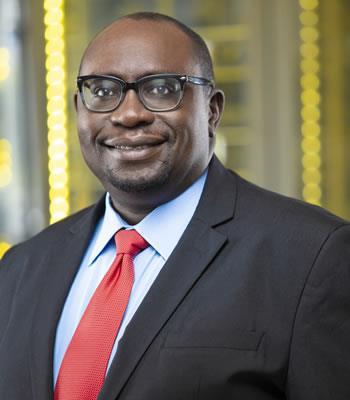
By Benjamin Mugisha (pictured), chief underwriting officer, ATIDI








No comments yet