
Re/insurance broker Howden Re said Middle East strikes have reshaped underwriting appetite while civil unrest and active assailant perils add pressure globally
The political violence and terrorism (PVT) re/insurance market is facing an unusually dynamic 1 July renewal, as Middle East conflict activity reshapes underwriting appetite and global loss trends add pressure across the class, according to Howden Re.
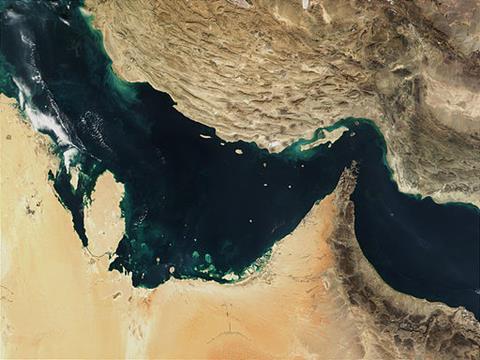
The broker said a sustained series of strikes involving IRGC-linked targets has changed underwriting appetite across the Middle East.
Broader global risk trends, including civil unrest in the Americas and active assailant events in Europe, are also compounding challenges for incumbents and new market entrants.
Howden Re said most markets in the region initially took a “pens down” approach to new enquiries following the escalation of Middle East strikes.
Since then, appetite has gradually reopened, but unevenly.
Several markets that were previously closed have revised their positions, while others are reviewing firm orders only.
Howden Re said the shift reflects the volume of inbound business, with some reinsurers receiving more than 50 submissions a day.
In the Middle East, many reinsurers are currently declining risks involving Western interests and certain critical infrastructure sectors, including airports, oil refineries, desalination plants and ports.
The broker said acceptable occupancies remain difficult to define, given that strike target lists continue to evolve on a near-daily basis.
Capacity is being deployed in deliberately limited line sizes.
Single-location risks and smaller limits are achieving greater success than large, multi-location programmes.
Wajih Tabbara, head of property, construction and political violence at Howden Re Dubai, said: “The market has moved quickly, and continues to move.
“What we are seeing is a market working through the consequences of a significant loss event in real time.
“Limited capacity, tighter controls, and underwriting decisions are being made against a target list that can change within 24 hours.
“For clients in high-exposure territories, the priority is securing cover now, with clean risk data and a clear narrative around exposure management.”
Early market estimates suggest insured losses from recent events and associated strikes could exceed $3bn.
Howden Re said overall economic and uninsured losses are expected to be materially higher.
The broker said the gap between insured and uninsured losses is likely to remain significant, reflecting asset concentration in regions and sectors where PVT coverage is limited, excluded or purchased at insufficient limits.
Beyond direct physical damage, reinsurers are monitoring potential prolonged business interruption, supply chain disruption and wider economic consequences across critical infrastructure, energy, logistics and transport.
Concerns remain elevated around further escalation, retaliatory actions and the widening geographic spread of exposures across the region.
Howden Re said rates are already under upward pressure, with tighter underwriting controls, reduced line sizes and higher attachment points.
Risks in high-exposure territories continue to face challenges securing broad coverage and adequate capacity, particularly for standalone political violence placements.
At the same time, new capacity is entering the market, notably from newly established MGAs and syndicates setting up political violence and terrorism as a line of business.
The broker said markets with established regional expertise and disciplined exposure management are still selectively deploying capacity, particularly for well-protected risks with strong risk management and clear exposure data.
Howden Re said the Middle East continues to dominate the PVT narrative, but wider global conditions also require attention.
Premium income across the class is estimated at around $1.5bn globally, against insured loss estimates already approaching double that figure.
The broker said this imbalance has implications beyond any single region.
Smaller and geographically dispersed incidents are also building alongside major conflict scenarios.
Civil unrest, active assailant incidents and riot activity have been recorded across the Americas, Europe and Africa in recent years, with cumulative attrition becoming increasingly material to class performance.
Olivia Pullen, director, terrorism and political violence at Howden Re London, said: “The class is entering a new phase.
“The large-scale conflict scenarios in Ukraine and the Middle East are well understood by the market, but what we also need to be increasingly focused on is the accumulation of smaller events happening in pockets across the world.
“These incidents are sometimes less visible individually, but they add up.
“There aren’t many territories now genuinely considered risk-free from a PVT and extended perils perspective.”
Howden Re said regional treaty aggregates are expected to come under increasing stress, depending on the duration and scale of further escalation in the Middle East.
If sustained, this could prompt retrocession markets to take a more cautious approach to capacity deployment, accumulation management and overall PVT exposure in the region.
“Disciplined, globally-diversified underwriting has never been more important,” Pullen added.









No comments yet