
Exclusive: UAE businesses struck by Iranian missile and drone attacks, including Dubai International Airport and Fairmont The Palm, bought terrorism policies rather than broader war or political violence protection
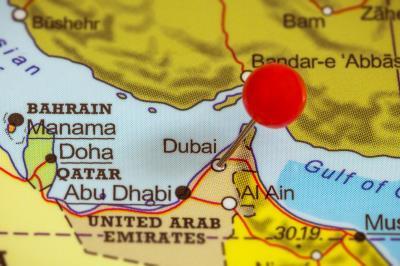
Two recent high-profile hits on properties in Dubai have laid bare a likely protection gap between buying terrorism insurance and broader political violence (PV) protection, with potential impact for forthcoming claims, sources tell GR.
Iran has launched hundreds of drones and missiles in retaliatory air strikes aimed at its Gulf neighbours in the first few days since the US and Israel began military operations against the Islamic Republic in the early hours of Saturday morning.
Dubai, not quite 100 miles distant from Iran across the Arabian Gulf and the Strait of Hormuz, has provided many high-profile civilian commercial targets for Iranian attack.
Both Dubai International Airport (DXB) and Fairmont The Palm are among those businesses that GR understands to have been insured for terrorism but not to have bought broader PV, designed to cover against a wider array of perils – including war.
“Many of the policies did. They never thought war might hit Dubai,” one PV market source told GR.
The UAE’s air defences claim to have shot down a high percentage of Iran’s incoming missile and drone barrage in the first few days of the conflict, but the country’s international airports are among the high-profile locations to have taken hits.
At Abu Dhabi’s Zayed International Airport, one fatality was reported, plus seven injured, while the attack on Dubai International Airport (DXB), the world’s busiest international airport, reportedly resulted in five injuries.
Hits on Jebel Ali’s port infrastructure, also in Dubai, temporarily closed the region’s biggest container port, while Iran has vowed to use its military to close the Strait of Hormuz – threatening to seal the Gulf to shipping.
Dubai luxury hotels such as the Burj Al Arab and Fairmont The Palm have meanwhile suffered damage, whether from incoming missiles or falling debris from missile interceptions.
Fairmont The Palm
Fairmont The Palm, situated on Dubai’s iconic The Palm Jumeirah, is understood to have bought a terrorism insurance policy, brokered by Lockton, rather than broader war risk protection, according to senior PV market sources within the region.
Four people were reported as injured in the hit on the hotel, which has sustained fire damage. Video footage of the event, analysed by Jeff Moore, CEO of Muir Analytics, a political violence threat intelligence provider, specialising in hotel security, suggested a Shahed drone caused the damage.
“My initial assessment is that this was likely a deliberate, targeted strike rather than incidental debris,” Moore told GR.
“You can clearly hear a high-velocity ‘hissing’ descent…the object appears triangular in shape and descends in a controlled manner. Visually, it resembles a Shahed-style drone profile,” Moore added.
DXB damage
Sources speaking to GR have also confirmed that Dubai International Airport (DXB), with Marsh as its broker, bought a policy covering terrorism and sabotage, rather than buying broader PV insurance protection.
Damage to DXB’s concourse was visible in social media imagery circulating on Sunday, with reports of four injuries to staff amid falling debris.
The DXB attack and wider situation led to temporary suspension of flights, although a small proportion of flights resumed on Monday.
Another PV underwriting source suggested to GR that the DXB incident, whether in material terms or as a bellwether for the PV market, could cause a change in local PV buying habits and a pricing turn for subsequent renewals.
“DXB is up for renewal on 1 April, [which] could be the end of the soft PV world in the UAE,” the source added.
Analysis: more questions than answers
The Iran conflict is ongoing with an unknowable duration, but there could yet “be a wave of political violence claims for the physical damage and destruction of privately-owned assets in the Gulf states and Israel”, Kennedy’s has observed in a briefing note published on Monday.
Dubai, as the Middle East’s regional re/insurance hub, is generally regarded as the most developed insurance market in the Gulf, with a strong local presence underwriting PV, as well as close links to the London market and other global underwriting hubs.
Along with concentrations in Israel and Saudi Arabia, where energy infrastructure has been struck, the UAE represents the biggest source of insured exposures within the region.
“Many of those policies will be written by local insurers under local laws and reinsured into the London market. Questions may also arise with regard to aggregation of losses under political violence insurers’ outwards reinsurances,” the legal firm added.
For now, there are many more questions than answers, such as whether governments in the UAE, Saudi Arabia, Bahrain or Qatar would label Iranian missile and drone attacks as acts of terrorism or war, with major consequences for claims among local buyers, insurers and reinsurers.
“Nobody knows, but what I do know is [local authorities] will want to support business,” said one senior PV source in the region.
It is similarly unclear in the case of such claims paid out under terrorism policies, how much insurers would be able to recover from their international reinsurers, potentially operating under different policy wordings and legal jurisdictions.
This is going to be where it gets interesting for reinsurance of a local cedent with UAE law and jurisdiction,” one PV source suggested. “If the insured has elected to buy terrorism and not to buy PV, including war, but then there’s this incident, who does the definition of what’s terror and PV fall to?”
Wordings for war risk between great powers are increasingly outdated, sources emphasised and are a topic for the Lloyd’s Management Association (LMA), which develops policy wordings across PV, as well as for marine and aviation war risk insurance lines of re/insurance business, also caught up in the conflict.
“This has been a long-standing conversation and has become a strategic play…[for insurers]…in terms of cancelation of policies and notice periods for marine, and the closure of airspace for aviation,” the source added.









No comments yet