
Global body says capacity remains available across cargo, hull and energy risks
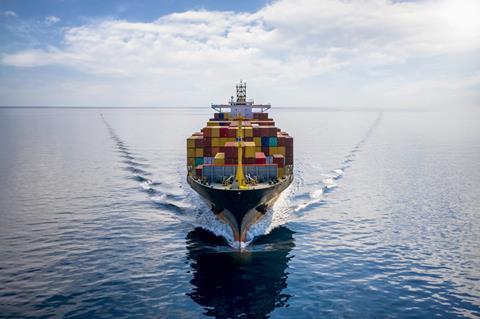
The International Union of Marine Insurance (IUMI) has released a statement stressing that marine insurers continue to support trade flows in the Middle East and the Strait of Hormuz, maintaining capacity across cargo, hull, liability and offshore energy lines despite escalating geopolitical tensions.
In a market update, IUMI said insurers have adapted pricing and underwriting to reflect heightened risks, but have not withdrawn support from the region.
The IUMI statement builds on a separate note released by the Lloyd’s Market Association at the start of the week, also emphasising the overall threat environment facing insureds, but also the availability of protection for marine traffic in the Gulf.
“The global marine insurance market continues to show resilience and is maintaining the availability of cargo, hull, liability and offshore energy cover despite increasing geopolitical tensions in the Middle East,” IUMI said.
On the cargo side, the organisation highlighted continued underwriting appetite even in high-risk zones.
“Cargo insurers across global markets remain committed to supporting trade flows, including in high-risk areas such as the Persian Gulf and Red Sea,” IUMI said.
“Although the evolving situation in the Middle East has prompted adjustments, particularly in war risk pricing and policy structures, significant capacity is still available,” the industry body for marine insurers continued.
“Many insurers are continuing to provide cover through established mechanisms, including cancellation and reassessment provisions, allowing for flexibility as conditions change,” IUMI added.
IUMI said these adjustments reflect a calibrated response to risk rather than any retreat from the market.
“This approach reflects a measured response to heightened risk, rather than any reduction in market support,” it said.
However, the body acknowledged that operational challenges are intensifying for shipping clients.
“Shipping disruptions, including sharply reduced vessel traffic and rerouting, have increased complexity for clients,” IUMI said.
“However, insurers are responding with tailored solutions and case-by-case underwriting to ensure continued protection for cargo interests,” it added.
In the hull market, IUMI pointed to continued stability, supported by underlying shipping fundamentals.
“The global hull insurance market remains outwardly stable, supported by resilient shipping demand and strong freight earnings. Even as geopolitical tensions reshape trading patterns, particularly around key transit routes, insurers continue to provide cover, adapting terms and pricing where necessary to reflect evolving risks,” it continued.
“The Middle East situation has introduced new operational realities, including rerouting and port congestion, but has not disrupted the availability of hull cover,” IUMI added.
In offshore energy, capacity remains widely available, IUMI said, particularly for upstream risks, despite rising volatility linked to geopolitical developments.
“While pricing and underwriting conditions are evolving to reflect increased exposures, there has been no systemic withdrawal of capacity,” IUMI added.
IUMI said insurers have demonstrated their ability to adapt as the conflict evolves.
“Marine insurers have demonstrated their ability to adapt and have continued to provide adequate cover to support the continuation of trade in the region,” it said.
On the liability side, underwriting approaches have shifted but core protections remain intact, according to the marine insurers’ group.
“Liability underwriters took the decision to adjust the way their non-poolable and charterers exposures were placed so they could be rated on a case-by-case basis,” IUMI said.
“Most of those contracts were moved to that basis but there was no change to provision of cover under the main International Group of P&I Clubs programmes as those are non-cancellable,” it added.







No comments yet