
Mark Rueegg, founder and CEO of CelsiusPro Group, explains why satellite-triggered re/insurance cover, premium subsidy and donor backing are critical to closing the climate protection gap in the Global South.
The uninsured share of climate losses remains overwhelmingly concentrated in developing markets, but Mark Rueegg believes parametric re/insurance can play a central role in addressing that imbalance.
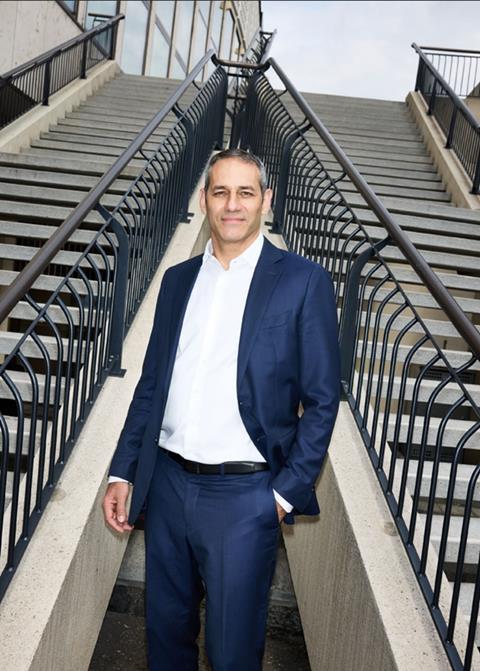
First, the industry will need to tackle challenges of education, affordability and scale head on, the founder and CEO of CelsiusPro tells GR.
Headquartered in Zurich, with operations in London and Sydney, the firm started in 2008 selling weather derivatives to SMEs.
“Nowadays we underwrite climate and natural catastrophe risks on a parametric basis only, 95% of which is at reinsurance level. We have three pillars: underwriting, technology solutions and advisory,” Rueegg says.
On the underwriting side, the business is predominantly reinsurance focused, with captive insurance as one major source of business.
Iraq and the mechanics of drought cover
One recent example is a drought programme in Iraq structured with the UN World Food Programme.
“We take satellite data and see the effects of drought, essentially to see whether it’s as green as it’s supposed to be at this time of the year,” he says.
The index is built on publicly available datasets, almost exclusively with information from the European Space Agency, NASA or similar publicly available sources.
“In order to structure a product, to underwrite it and to settle it, you need to have data consistency,” he says.
Instead of traditional loss adjustment on the ground, the trigger is based on gridded satellite data across defined agricultural regions.
“You take a region, it’s all based on satellite data,” he explains. “You select the pixels that represent the agricultural growing region, you look historically which were the bad years, and you structure products that respond to those years.”
The attraction, particularly for humanitarian reasons, is speed and certainty, he suggests.
“By buying a parametric cover for a particular country or region, they get the funds paid when catastrophe triggers the product into action, as opposed to delay and uncertainty,” he adds.
Education, calibration and contract certainty
Despite growing momentum, Rueegg says the parametric model still faces cultural resistance within the re/insurance sector.
“One of the challenges for parametric products is that a relatively small number of people in the insurance industry understand them,” he says. “It’s still, to a large extent, an educational issue.”
Calibration is another key consideration, he emphasises.
“Where do you set the trigger?” he asks. “There’s always discussion around basis risk, about where you think you should get a claim and where you don’t get a payout.”
However, he argues that parametric clarity is a strength rather than a weakness.
“With regards to contract certainty, in my view, parametric is much higher, because it says what’s in there,” he says. “It’s much more like a single peril contract.”
Scaling beyond a ‘drop in the ocean’
The wider question is whether parametric solutions can materially dent the protection gap for natural catastrophe risks – that is the gap between economic and insured losses – that exists, particularly in the Global South.
“The ‘drop in the ocean’ statement is a fair point about where we are at the moment,” Rueegg acknowledges. “But the solutions we have are extremely scalable.”
He argues the challenge goes beyond one of product design.
“In the Global South it’s not just about the product,” he says. “It’s about education, insurance literacy, insurance penetration and affordability.”
A notable shift has begun to take place among donor governments and development finance institutions, he suggests,
“Five years ago, premium subsidy was a no-no for many of the big donor countries,” Rueegg says. “Now they realise that without subsidy, premiums are just not affordable, and people will not buy.”
Meaningful coverage must respond more frequently than “once in a century”, he stresses.
“You probably need something that pays for a one in 10- or 20-year event, and not only in a one in 100-year event,” he says.
He adds: “And to bridge affordability, premium subsidy is an absolute need.”
Risk pools and microinsurance
CelsiusPro works with regional sovereign risk pools including African Risk Capacity, CCRIF SPC in the Caribbean, the Southeast Asia Disaster Risk Insurance Facility and the Pacific Catastrophe Risk Insurance Company.
These regional risk transfer platforms insure governments directly and, increasingly, are extending into microinsurance.
Through such partnerships, parametric products are being delivered to smallholder farmers, fishermen and informal workers, typically supported by premium subsidy and backed by risk capacity from blended vehicles such as the Natural Disaster Fund.
Parametric insurance, he argues, is never going to be a silver bullet.
Yet with satellite data, structured triggers and sustained donor backing, it offers a transparent and scalable mechanism to inject liquidity where it is most needed, and to turn climate resilience from aspiration into funded reality.
For Rueegg, the direction of travel is clear.
“If governments understand they are exposed to natural disasters, they need to take steps to look after themselves with insurance rather than pleading for help from the international community after a disaster has already occurred,” he adds.









No comments yet