
Rating agency says investment portfolios, not claims, are the main transmission channel, though prolonged disruption could erode capital and weaken sector outlook
The credit impact of the Iran conflict on insurers within the Gulf Cooperation Council (GCC) countries is likely to remain contained in the near term, with most pressure expected to flow through investment portfolios rather than insurance claims, according to new analysis from Moody’s Ratings.
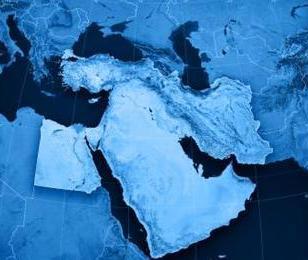
However, the agency warned that a longer or escalating conflict could weaken insurers’ balance sheets, erode capital buffers and threaten the sector’s currently stable credit outlook.
GCC countries Iran have been targeted by hundreds of drones and missiles in retaliatory air strikes aimed by Iran at its neighbours in the first few days since the US and Israel began military operations against the Islamic Republic in the early hours of Saturday morning.
In a report, “Insurance – Gulf Cooperation Council: Impact of Iran conflict limited for now, risks rise if disruption prolonged”, Moody’s says the immediate outlook assumes the conflict remains short-lived and disruption to regional trade and aviation proves temporary.
“We expect the near term credit impact of the Iran conflict on insurers in the Gulf Cooperation Council (GCC) region to be limited,” the report states.
“Our baseline scenario is that the conflict will be relatively short-lived, likely a matter of weeks, and that navigation through the Strait of Hormuz and air traffic will then resume at scale.”
“Under this scenario, GCC insurers would not face immediate material pressure on their credit profiles.”
Assets side focus
Rather than underwriting losses, Moody’s expects any immediate financial impact to emerge primarily through asset valuations hitting insurers’ investments.
“The primary transmission channel would be through insurers’ investment portfolios rather than their underwriting performance,” the report says.
“Disruptions to oil and gas exports and tourism would weigh on regional asset prices, particularly real estate and equities, leading to valuation declines.”
The agency notes that larger insurers in the region are better positioned to absorb such shocks, partly because their portfolios are less concentrated in volatile asset classes.
“Larger diversified insurers, which have relatively low exposure to real estate and equities, are less vulnerable than smaller ones.”
“Within our rated portfolio, which is skewed toward larger companies, around 40% of the capital risk charge reflects asset risk per our capital adequacy metrics, from which real estate and equity exposures account for about one third of the capital risk charge.”
Even under a moderate market correction, Moody’s expects most rated insurers to remain adequately capitalised.
“We estimate that a 20% decline in real estate and equity valuations would reduce our rated companies total equity by around 7%.”
“This would be largely absorbable, as most rated insurers have adequate capital buffers.”
However, the agency warns that smaller insurers across the region are structurally more exposed to market volatility.
“Smaller GCC insurers, in contrast, often have limited capital cushions as well as higher equity and real estate exposure.”
Claims exposure limited
Direct insurance claims from the conflict itself are expected to remain minimal for regional carriers.
“The direct claims impact of the conflict will likely be negligible for all GCC insurers, as war risk is typically excluded from standard insurance policies in the region.”
Instead, much of the underwriting exposure to war-related losses sits with international markets, particularly those underwriting marine and energy risks.
“London market insurers generally underwrite this risk, including for energy and goods shipments through vulnerable shipping lines such as the Strait of Hormuz and the Red Sea.”
Moody’s notes that global insurers and reinsurers could still face accumulation risks in certain classes, particularly marine hull and cargo.
“The main underwriting vulnerability lies in marine hull and cargo, where accumulation risk arises if war-covered vessels are immobilised in ports or anchorages and struck in close proximity.”
Prolonged disruption risks
While the near-term outlook remains stable, Moody’s cautions that a longer conflict would have broader financial consequences for the sector.
“Risks would increase if disruption persists.”
“Second round pressures would intensify in the event of a prolonged conflict, or if attacks on GCC countries were to escalate.”
Under that scenario, the combined effect of weaker asset prices and slower economic growth could quickly feed through to insurers’ earnings and capital.
“Sharper declines in asset prices, weakening investor sentiment, and deteriorating macroeconomic conditions would weigh on insurers’ balance sheets.”
“The worsening economic environment would in turn undermine insurers’ premium growth, a key factor underlying our current stable outlook for the GCC insurance sector.”
“A deceleration in premium growth would likely exacerbate competitive pricing pressures as insurers compete for a smaller pool of business, compressing underwriting margins.”
“Combined with more pronounced asset valuation losses, these factors could erode capital buffers and, if sustained, negatively affect for the sector’s credit outlook.”









No comments yet