
Dickie Whitaker, chair of Oasis SaaS, says the new platform is designed to expand choice in catastrophe modelling, giving re/insurers and brokers access to multiple views of risk rather than relying on a small number of vendor sources
The launch of Oasis Software as a Service (SaaS) marks what Dickie Whitaker describes as the next step in a long-running effort to introduce greater competition and transparency into catastrophe modelling.
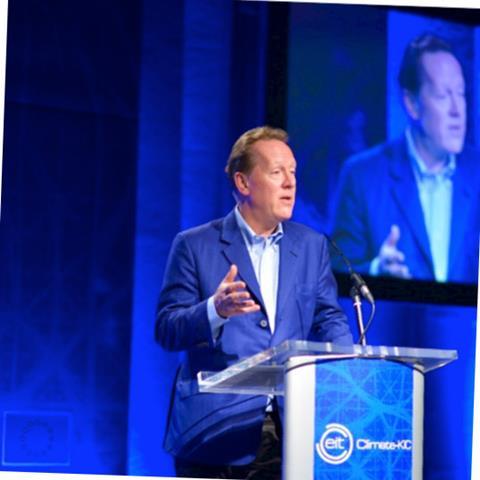
Whitaker, chair of Oasis SaaS and founder of the Oasis Loss Modelling Framework, says the original motivation behind Oasis was simple: the industry had become too reliant on a small number of model providers.
“If you go back a few years, the reason I started Oasis in 2014 was that there clearly wasn’t that choice available within catastrophe modelling for the insurance industry,” Whitaker says.
“We were overly reliant on just two or three big companies that essentially were dominating the marketplace, and I knew from my experience that wasn’t a good thing.”
Whitaker (pictured) argues that diversity of modelling views is not simply an intellectual preference but a commercial necessity for insurers trying to understand complex catastrophe risks.
“There are demonstrably better results when you get a diversity of opinion from models,” he says.
“Uncertainty is what drives the whole utility of these things; If you’ve got one view of risk, or maybe even two, that’s not really enough when you’re dealing with massively complex models,” he adds.
Whitaker recalls that the market was once more comfortable working with several cat models at once.
“Thirty years ago, everybody was using multiple models,” he says. “Over time it diminished to people using one of the two big platforms.”
The Oasis initiative was designed to reverse that trend by encouraging more model development and providing infrastructure that allows firms to run multiple views of risk.
“The Oasis concept was to try and bring that diversity of opinion, to bring better results,” Whitaker says.
“This isn’t just nice to have. It improves profit.
“This stuff is hard, and if you’re trying to understand these massively complex models there are really only two ways of doing it well.
“One is a deep dive into each of them, and the other is by using multiple models; it’s not either or, it’s both,” Whitaker says.
A neutral platform
The new Oasis SaaS platform builds on that philosophy by providing a cloud-based environment where model vendors can deliver their intellectual property while customers can run multiple models in a neutral setting.
Whitaker says the industry had already been moving in this direction through earlier collaborations with firms such as Moody’s, which bought cat modeller Risk Management Solutions (RMS) in 2021.
“Three years ago, roughly, Moody’s came to me and said, ‘We’ve got a good idea. We think we should offer our clients the ability to access Oasis-based models from your platform,’” he says.
“They wanted it done with a separation so that Moody’s couldn’t see the models directly, everything done through APIs.”
The idea was to allow Moody’s RMS clients to access Oasis models without compromising the independence of model providers.
Whitaker says the concept was widely welcomed.
However, subsequent industry developments have reinforced the need for a truly independent platform, he suggests.
“If you’re in the insurance or reinsurance industry, you’ve been more-or-less in one vendor modelling camp or another,” Whitaker says. “Almost everybody is dominant in one.”
That dynamic has risked limiting access to alternative models depending on which ecosystem firms were operating within.
Oasis SaaS, he says, is intended to solve the problem by remaining vendor-neutral and industry-owned.
“The whole point is to preserve independence and customer choice,” Whitaker says.
“The objective is very simple: make it easy for the industry to access multiple models and therefore have a better understanding of risk,” he adds.







No comments yet