
Ratings agency warns about the wider economic shock of the US-Israeli war against Iran, which has spread to the Gulf monarchies and the Strait of Hormuz, the effects of which may outweigh direct insured losses

The immediate insurance impact of the ongoing Middle East conflict appears manageable for global re/insurers, but a prolonged crisis could test market resilience through economic disruption, according to analysis from AM Best.
The ratings agency said direct losses to the global reinsurance sector remain limited so far, in a new report examining the implications of the US-Israel conflict with Iran.
However, the broader economic consequences of the conflict, including inflationary pressure, supply chain disruption and financial market volatility, could have more far-reaching implications for insurers.
“The wider economic impact stemming from the conflict could have repercussions for the credit quality of re/insurers,” AM Best said.
The report notes that tensions have escalated rapidly since US and Israeli military action began on 28 February, triggering volatility in global energy markets and raising concerns about the stability of key trade routes and energy supplies.
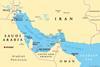
The Middle East remains central to global energy production, and particularly the Strait of Hormuz.
“With the region producing approximately 20% of global energy resources, the disruption caused by the conflict has resulted in the countries of the Gulf Cooperation Council halting or reducing production of oil and gas,” the report said.
Energy price volatility and supply chain disruption could feed inflationary pressure across global economies, creating a more challenging operating environment for insurers and reinsurers.
For the insurance sector itself, the immediate exposure is concentrated in several lines closely tied to geopolitical events.
“Marine, aviation, trade credit, (contingent) business interruption and political risk insurance have experienced (or are likely to experience) the most direct and immediate impacts,” AM Best said.
Even so, the structure of insurance placements in the Gulf region limits the net exposure retained by local carriers.
Large commercial risks in the region are typically placed through domestic insurers but heavily reinsured into international markets.
“Commercial risks in the GCC are typically placed through a local insurer. These high value risks are generally reinsured with little retention for the primary insurer,” the report noted.
In addition, cover extensions such as war risk or political violence are usually transferred into the global reinsurance market, where pricing and technical expertise are concentrated among specialty reinsurers.
As a result, the accumulation of net exposures among regional insurers remains relatively contained.
“Given the high reinsurance dependence, the accumulation of net exposures retained by regional insurers remains manageable,” AM Best said.
However, the conflict could still create stress points for insurers if the crisis drags on or spreads more widely.
The rating agency warned that reinsurance renewals could become a key pressure point for the sector.
“For the regional markets, reinsurance renewals will be a critical inflexion point for the sector. Should the conflict continue for any length of time, reinsurers may need to re-evaluate exposures in the region.”
Governance and risk management frameworks will also come under scrutiny as insurers navigate a volatile geopolitical environment.
AM Best said insurers must ensure that policy wordings and reinsurance arrangements remain closely aligned.
“It is important for the primary insurers to ensure policies are back-to-back to ensure there are no gaps in contract wordings between the reinsurer and insurer.”
Investment portfolios represent another potential channel for stress, the rating agency suggested.
While many regional insurers hold significant allocations in cash, exposure to equities and real estate could increase balance sheet volatility if financial markets remain unstable.
At the same time, the report highlights the difference in risk management maturity between global reinsurers and smaller regional carriers.
“For global reinsurers, stress testing and scenario analysis is fundamental to their risk management approach,” AM Best said.
Despite these risks, the agency emphasised that the insurance sector has so far demonstrated resilience.
Even significant individual losses should remain manageable for the global reinsurance market.
“The scale of losses is not expected to be such that it could threaten the solvency of global re/insurers,” the report said.
But the longer the conflict persists, the more the industry may need to adapt its underwriting strategies and pricing assumptions.
“In the longer term at renewals, reinsurers may adjust pricing, terms and conditions and commission structures to reflect the heightened geopolitical risk environment,” AM Best added.








![By Rex at nl.wikipedia (Transferred from nl.wikipedia)[see page for license], from Wikimedia Commons](http://upload.wikimedia.org/wikipedia/commons/6/68/Perzische_Golf.jpg)
No comments yet