
New analysis of resilience financing against natural catastrophe risk shows sharp rise in proactive risk finance but poorest countries still receive a small share
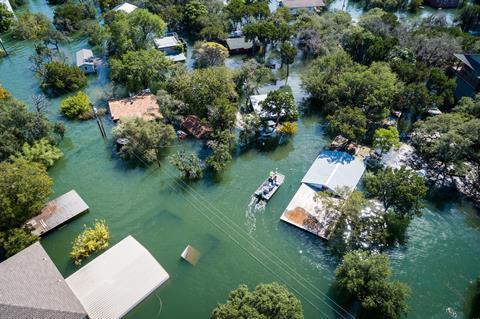
International pre-arranged financing for disasters reached a record $9.4bn in 2024, as governments and development institutions accelerated the use of funding mechanisms designed to release money rapidly when crises strike.
The findings are set out in “The State of Pre-Arranged Financing for Disasters 2025”, published by the Centre for Disaster Protection, which tracks global flows of catastrophe risk finance and how they are distributed across countries and regions.
The report shows a sharp rise in proactive disaster financing at a time when aid budgets are tightening and climate-related shocks are becoming more frequent and severe.
However, it also highlights a persistent imbalance in who benefits.
Low-income countries and fragile and conflict-affected situations each received less than 7% of total international pre-arranged financing in 2024, despite facing some of the highest exposure to climate and disaster risks.
The centre said this disparity underscored long-standing challenges around access to, and affordability of, financial protection for the most vulnerable states.
Pre-arranged financing refers to crisis funding that is approved in advance and released automatically when predefined trigger conditions are met.
By securing finance ahead of disasters, governments are able to respond more quickly, limit economic losses and protect households and businesses from the worst impacts.
The report shows that payouts from pre-arranged financing mechanisms more than doubled in 2024, reaching $879m.
This reversed a decline seen since the Covid-19 peak in 2020.
World Bank catastrophe deferred drawdown options accounted for the majority of payouts during the year.
Support from development partners for pre-arranged financing grew more modestly in 2022–23.
Funding rose by 6% to $889m, representing around 1.2% of total crisis financing.
Despite that increase, allocations to low-income countries remained minimal, even as their exposure to climate hazards and disaster-related losses continued to intensify.
Now in its third year, the report brings together data that has previously been fragmented or difficult to access.
The analysis draws on information from multilateral development banks, regional risk pools and humanitarian partners to provide a consolidated view of how much pre-arranged financing is being deployed, where it is flowing, and where gaps remain.
The centre said the surge in 2024 was driven largely by growth in contingent loans, particularly those offered by the World Bank and the Inter-American Development Bank.
Regional risk pools and catastrophe bonds also continued to play an important role in expanding coverage.
Colin Bruce, board member and co-chair of the Centre for Disaster Protection, said the headline growth masked continuing structural weaknesses.
“PAF reached an all-time high of $9.4bn in 2024, with growth across all country groupings and types,” he said.
But low-income countries and fragile and conflict-affected situations still have the smallest share of pre-arranged financing, and more should be done to support the most vulnerable communities to prepare for and address crisis risks,” he continued.
Bruce said recent disasters had underlined the importance of having funding in place before shocks occur.
He said: “As we’ve seen in countries hit by recent shocks, having finance ready to flow when disaster strikes can underpin proper planning and help families and businesses recover far more quickly.”
He added that while finance alone was not sufficient, events such as Hurricane Melissa showed how critical pre-arranged funding could be in supporting effective response and recovery.
Kimberly Gire, board member and co-chair at the centre, said the report provided the most comprehensive global picture to date of how pre-arranged financing is functioning in practice.
“There is unquestionably good news here, with growing momentum behind more proactive approaches to disaster risk. But the report also surfaces challenges,” Gire said.
She suggested further progress would require coordinated action from governments, donors and financial institutions.
“We call on the global community to continue to scale up international pre-arranged financing, improve accessibility and affordability for low-income and fragile countries, and strengthen transparency from all actors,” she said.
The centre said the findings pointed to clear momentum behind anticipatory disaster finance, but warned that without broader access, the countries most exposed to climate shocks risk being left behind.
Michèle Plichta, senior researcher at the centre and lead author of the report, said consolidating disparate data sources was a critical step towards accountability.
“By bringing together previously inaccessible data, this report aims to improve transparency across the international financing system. That is essential if we are to ensure timely, equitable and dignified protection when crises strike,” Plichta added.









No comments yet