
Latest news

Exclusive: Yemeni Houthis send Saudi airspace warning to aviation insurers
Message from the Houthi group addressed to insurers and reinsurers warns Saudi airspace is an area of military operations until further notice

Brit Re appoints Winn CUO and Bermuda head
Property treaty veteran will relocate from London as Brit continues expansion of its Bermuda reinsurance platform
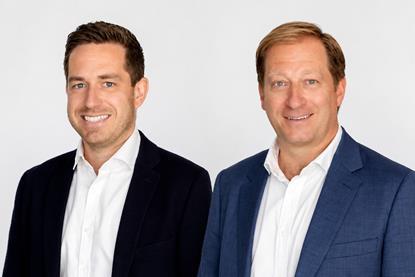
Antares backs cedant quality as reinsurance rates soften
Data transparency and broader client relationships will guide Antares through a softer market, with Martin Campbell and Mat Storr targeting disciplined growth while monitoring pressure on pricing adequacy.

Fidelis Partnership appoints Bowman CEO Bermuda in leadership reshuffle
Trio of senior appointments also include Mark Herget as CUO Insurance Bermuda and Danny Mereu as deputy CUO as the MGA expands its presence on the island

Underwriting discipline and capital efficiency separating top insurers: Howden Re
Analysis of 42 European non-life insurers finds strong underwriting and efficient capital management are more important than large solvency buffers in the changing market cycle
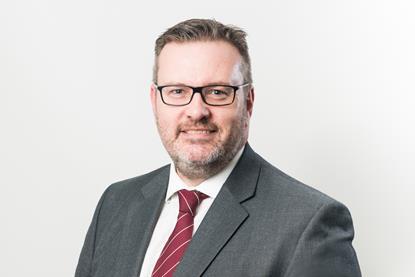
Pro: MGAs retain capacity support as growth becomes more selective
Capacity continues to be attracted to specialist MGAs despite mounting growth pressures, says Pro MGA Solutions CEO Dan Maleary, as the business targets international expansion

Credeq Syndicate 1998 receives Lloyd’s in-principle approval
Specialist credit syndicate is expected to begin underwriting from 1 January 2027, adding capacity for credit risk insurance, surety reinsurance and European trade credit
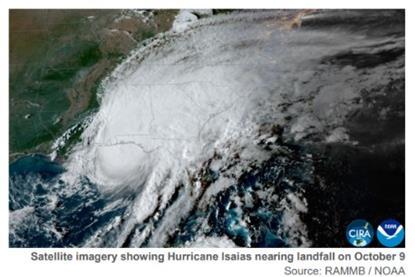
Hurricane Isaias insured losses seen in low billions as market absorbs Florida hit
Verisk estimates onshore insured property losses of $1bn-$2bn, while Gallagher Re expects a broader insured total at the lower end of the low-to-mid-single-digit billion range

Liberty Mutual Re appoints Øyan market manager for Nordics
Former Protector Forsikring executive will support growth across Northern Europe from Liberty’s Oslo office
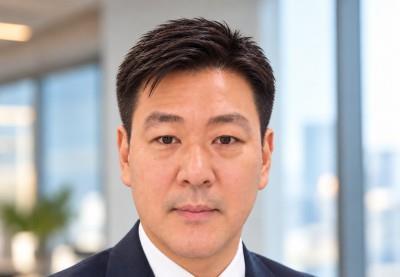
Willis appoints Chang global D&F growth leader
Ex Aon exec joins in Miami to support growth across Willis’ global direct and facultative business

Flood Re appoints Green as new chair
Senior independent director will succeed Bridget Rosewell CBE, subject to regulatory approval

MS Amlin ups support for Ukraine war-risk facility to €130m
EBRD-backed scheme expands to €150m as additional insurers join and cover broadens to include gas assets and warehouse inventory

Price Forbes, Brit launch Accordium integrated property, cargo and terrorism facility
Accordium will target international SME and mid-market clients with up to $1bn of total insured values through a single London market policy

Verisk’s Newbold highlights data centre exposures and AI underwriting risks
Rob Newbold, president of Verisk Extreme Event Solutions, discusses data centre concentrations, the need for human oversight of AI and catastrophe risk beyond the pricing cycle
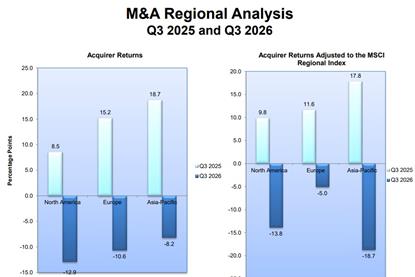
Mega deals drive global M&A activity to new high: WTW
Deal value rose 23.9% in the first nine months of 2026 as record mega transactions drove activity, although acquirers continued to underperform wider equity markets

Optio launches Pinnacle Specialty Insurance in continental Europe
Amsterdam-based MGA will offer warranty and indemnity, tax liability and contingent risk cover across the European Economic Area
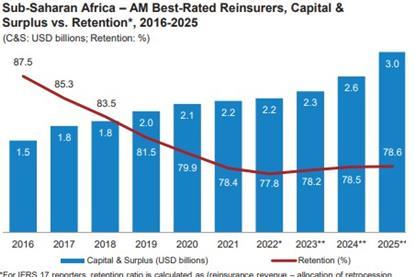
SSA reinsurers remain resilient but capacity gap persists: AM Best
AM Best has said sub-Saharan African reinsurers maintained robust underwriting results in 2025, although local capacity remains insufficient to meet growing demand across major risks

Willis Re appoints Artmann CEO of Germany
Former Munich Re executive will lead the establishment and development of Willis Re’s German operations

Collins to step down as Howden exec chair
Broking veteran will become president emeritus as the group prepares for its next phase of growth and a potential public listing

Arch appoints De Simone to lead cyber in Italy
Former Sompo senior cyber underwriter will oversee growth of Arch’s cyber, tech E&O and media E&O portfolio across Italy

MENA reinsurance moving from resilience to opportunity – Lockton Re’s Monayer
Lockton Re MENA CEO Gerard Monayer told GR the region’s economies have proved resilient during a period of geopolitical uncertainty, while insurers are putting greater emphasis on capital efficiency, balance sheet optimisation and protection against emerging risks.
Part of the Insurance and Risk group of Newsquest Specialist Media



Published by Newsquest Media Group Limited,
registered in England & Wales with number 01676637
at The Echo Building, 18 Albert Road, Bournemouth,
England, BH1 1BZ - a USA Today company
registered in England & Wales with number 01676637
at The Echo Building, 18 Albert Road, Bournemouth,
England, BH1 1BZ - a USA Today company
Site powered by Webvision Cloud